

Are Wooden Wick Candles Better Than Cotton for a Cleaner Burn?
The first time you light a wooden wick candle, it crackles like a tiny fireplace, and most people are sold in about four seconds. That sound is the headline feature, but the wick you choose changes more than the soundtrack. It affects how evenly the candle burns and how much soot it leaves behind. Here is the honest difference between wooden wicks and cotton wicks, which one actually burns cleaner, and why the wax underneath matters more than either. Every MBur candle uses a wooden wick, so the full collection is here as you read.
What a wooden wick actually is
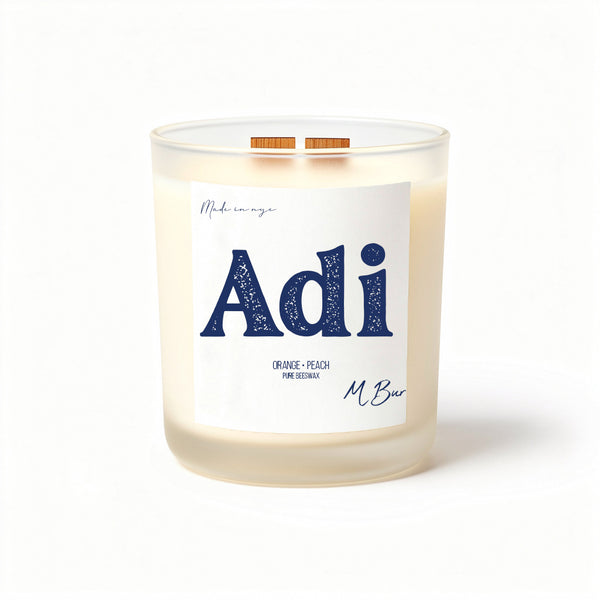
A wooden wick is a thin, flat strip of wood instead of the braided cotton string you are used to. When the flame meets the wood, it burns along the top edge and gives off that soft crackle, the same reason a fireplace sounds the way it does. The flame is usually wider and shorter than a cotton flame, which changes how the candle melts.
Wooden wick vs cotton wick, honestly
Wooden wicks have real advantages and a couple of quirks worth knowing. They burn cooler and wider, so they tend to melt the wax evenly across the top and tunnel less than a cotton wick that was never trimmed. They produce very little soot when kept trimmed. And the crackle is genuinely nice, not a gimmick. The tradeoff is that a wooden wick can be fussier to light and will drown itself if the wax pool gets too deep, which is usually a sign it needed a trim.
Cotton wicks are not the villain here. A good cotton wick in a clean candle burns perfectly well. The thing to actually avoid is a cheap metal core wick, which older or bargain candles sometimes use for stiffness. Metal core wicks were a real problem back when some contained lead, and while lead wicks are banned in the United States, a metal core is still not what you want burning indoors. A wooden wick or a plain cotton wick are both better choices.
Which one actually burns cleaner?
This is where honesty matters more than marketing. A well trimmed wooden wick and a well trimmed cotton wick both burn cleanly. A wooden wick has a slight edge because its cooler, wider flame is less likely to soot, especially if you forget to trim it. But the single biggest factor in how clean a candle burns is not the wick at all. It is the wax. A wooden wick wrapped around cheap paraffin still gives you paraffin soot and whatever the fragrance is hiding. The wick is the finishing touch, the wax is the foundation.
Wooden wick vs cotton wick at a glance
| Factor | Wooden wick | Cotton wick |
|---|---|---|
| Sound | Soft crackle | Silent |
| Flame | Wider, cooler | Taller, hotter |
| Even melt | Melts edge to edge | Even when trimmed |
| Soot | Very low when trimmed | Low when trimmed |
| Fuss | Can need relighting | Easy to light |
| Avoid | Nothing in particular | Metal core versions |
Where MBur lands
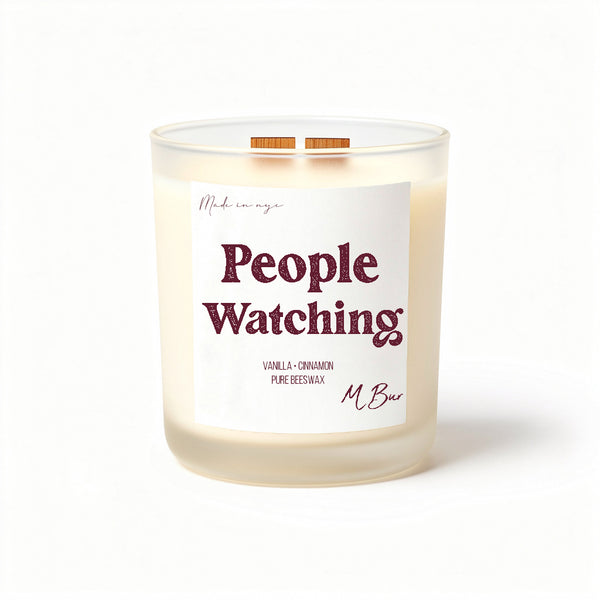
We use an untreated wooden wick on every candle for the crackle and the even, cooler burn, and we pair it with the one thing that actually decides your air: 100% beeswax with phthalate free non toxic fragrance and no dyes. You get the fireplace sound and the clean foundation underneath it. People Watching with lemon, orange, vanilla, and warm spices is a good one to light by a window and let crackle. The rest of the lineup is in the collection.
The even burn is the part people mention once they have lived with one. As one buyer put it:
From the packaging to the burn of the candle, everything was top notch. Candle burned slowly and was exactly the amount of hours the company said it would burn. - Portia Darby, Adi Candle
Caring for a wooden wick
A wooden wick rewards a little care, and the habits are simple. Before each burn, snap off the blackened top so the wick sits at about an eighth of an inch, which keeps the flame low and even. Light it along the top edge rather than at one spot, and give it a moment, since a wooden wick can take a little longer to catch than cotton. If it struggles to stay lit, the wax pool has usually gone too deep or the wick is too long, both of which a trim fixes. Treated this way, a wooden wick crackles cleanly for the life of the candle.
Common questions
Do wooden wick candles burn longer?
Often, yes. A wooden wick burns cooler than cotton, so the wax is consumed a little more slowly, and a cooler flame paired with beeswax, the highest melting wax there is, stretches the burn time further. Trimming the wick before each burn is what keeps it slow and even. You can compare burn times across sizes in the collection.
Why does my wooden wick keep going out?
Almost always one of two things: the wick needs a trim, or the wax pool got too deep and drowned it. Keep the wooden wick trimmed to about an eighth of an inch and let it establish a full but shallow melt pool, and it will stay lit. A wick that keeps dying is usually asking to be trimmed shorter.
Do you have to trim a wooden wick?
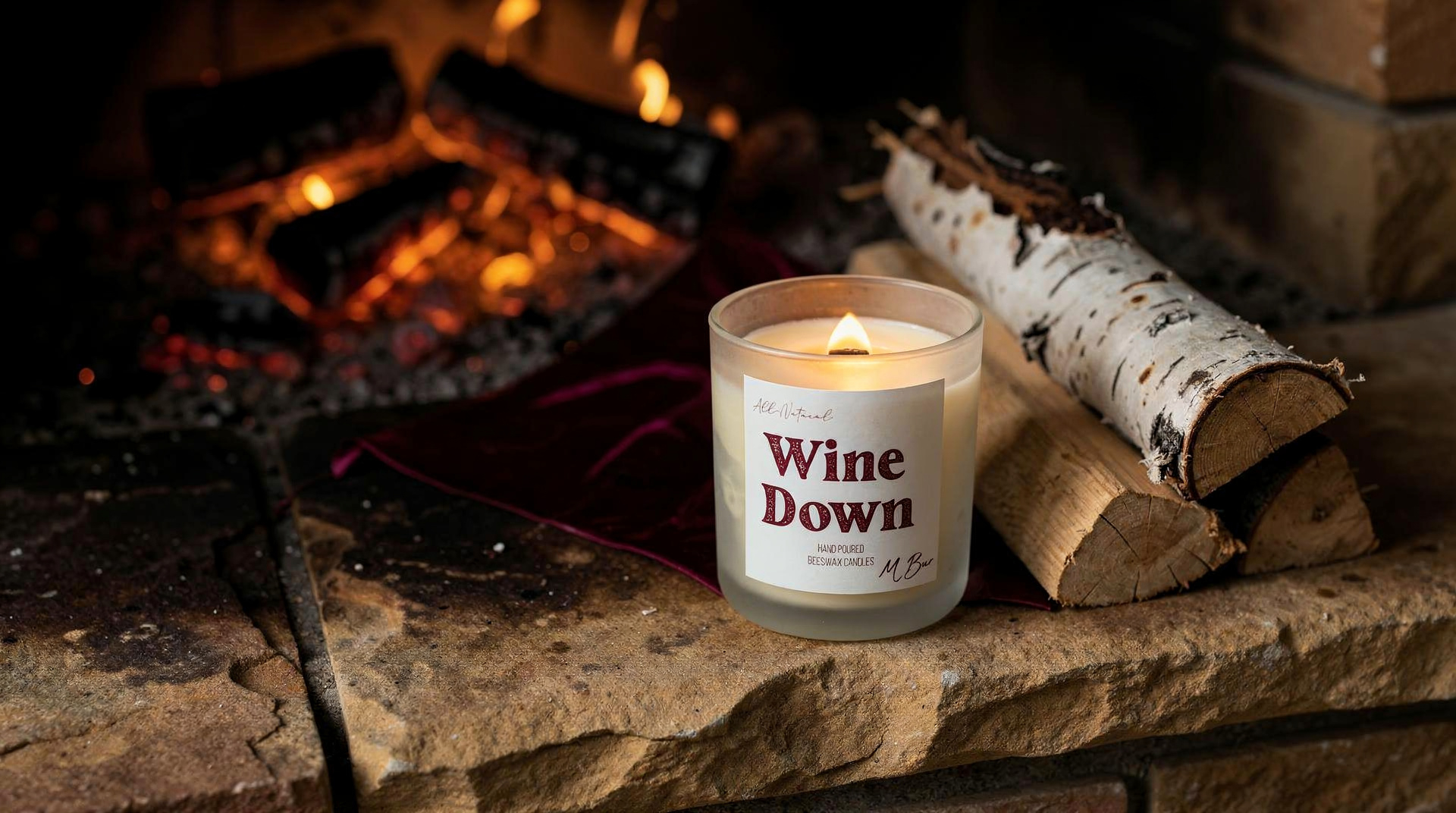
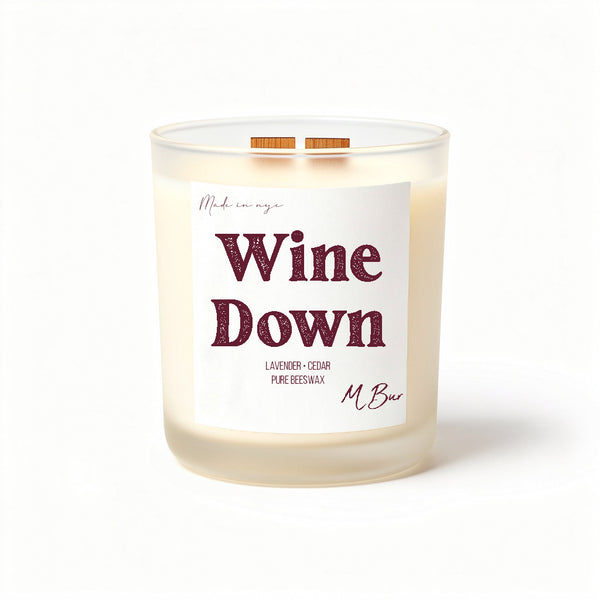
Yes, and it is the single best habit for a clean, even burn. Snap off the charred top so the wick sits at about an eighth of an inch before you light it. A trimmed wooden wick burns slow and nearly soot free. Wine Down is an easy one to practice on in the evening.

The bottom line
Wooden wicks win on the crackle and a more even, cooler burn, and they edge out cotton on soot when you keep them trimmed. A clean cotton wick is still perfectly fine, and a metal core wick is the only one to actually avoid. Whichever wick you choose, the wax is what decides your air, so start with beeswax and let the wooden wick be the finishing touch.
Hear the crackle for yourself in the full MBur beeswax collection, every candle a wooden wick over 100% beeswax.
What buyers say:

