

What Does Hand-Poured Actually Mean? (And Why It Matters)
What Does Hand Poured Actually Mean? (And Why It Matters)
The word "handmade" appears on roughly 4.4 million products on Etsy alone. It is one of the most used, most stretched, and most misunderstood labels in consumer goods. In the candle world specifically, "hand poured" gets stamped onto everything from small batch studio candles to factory overruns that were touched by a human hand for exactly three seconds during packaging. So what does it actually mean? And more importantly, does it change anything about the candle sitting in your living room?
The short answer is yes. Dramatically. But only when the term is used honestly. This post breaks down what hand pouring actually involves, why the process affects quality in measurable ways, and what to look for when a brand makes that claim.
The Definition Nobody Agrees On
There is no regulatory body that defines "hand poured" for candles. No certification. No standard. The candle industry operates largely on the honor system.
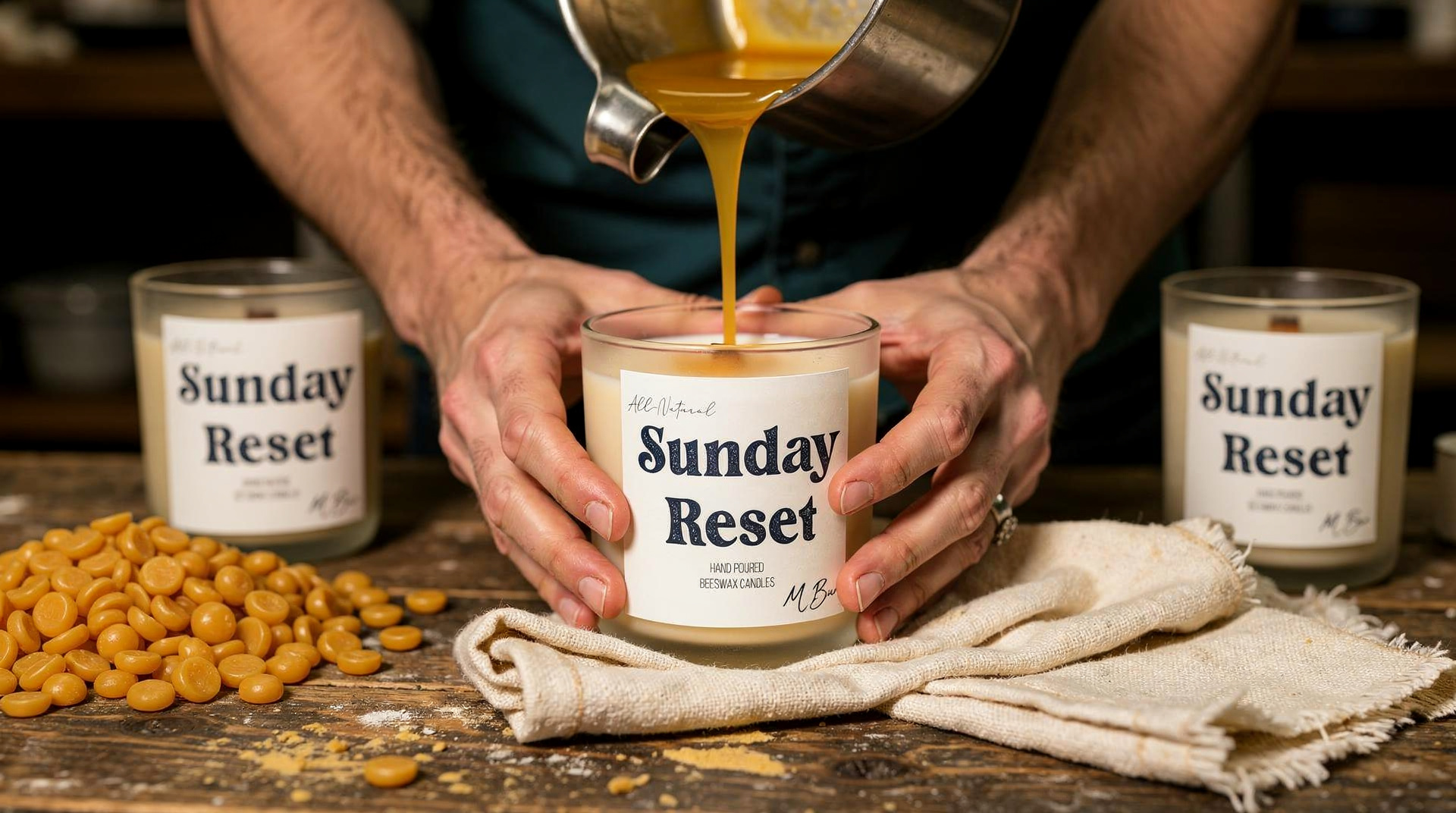
At one end of the spectrum, a factory may use automated machinery to fill hundreds of vessels per minute, then have a worker place a lid on each one. At the other end, a small producer measures, melts, fragrances, and pours every single candle individually, adjusting temperature and technique by batch.
Those are not the same thing.
Why Pour Temperature Actually Matters
Beeswax has a melting point between 144 and 147 degrees Fahrenheit, notably higher than paraffin (around 115 to 130 degrees) and soy wax (around 115 to 125 degrees). That higher melting point is part of why beeswax candles burn longer than any other wax type. It is also why beeswax requires more careful handling during the pour.
If beeswax is poured too hot, the fragrance compounds can volatilize off before the wax sets, resulting in weak scent throw. If it is poured too cold, the wax may not fully integrate with the fragrance. The sweet spot is narrow, and hitting it consistently requires attention that a machine running at volume simply cannot provide.
Phthalate free fragrance oils require precise temperature integration to perform correctly. This is one reason why candles made with non toxic fragrance can sometimes underperform in lower quality production environments.
The Cooling Rate Problem
When wax cools too quickly, it contracts unevenly. This creates sinkholes in the surface, poor adhesion to the vessel walls, and structural defects that affect burn quality. Mass production environments often use forced cooling to accelerate throughput.
Hand pouring allows the maker to control the cooling environment. For beeswax specifically, a longer, slower cooling period produces a denser, more uniform wax structure. That density contributes directly to the extended burn time that beeswax is known for.
What a Real Small Batch Looks Like
A genuinely hand poured operation works differently from a factory. Batches are small enough that every pour can be individually assessed. The maker can detect a fragrance ratio that is slightly off, a pour that cooled unevenly, or a wick that is not centered perfectly. Those units get pulled, not packaged.
At MBur Candle Co., every candle is made in Queens, NY. That means there is a physical location, a small studio, where each candle in the collection is poured.
The Ingredient Question
Hand pouring matters most when it is applied to ingredients worth the effort. Pouring paraffin by hand is a marginal improvement over machine filling. Paraffin is petroleum waste. It releases benzene, toluene, and formaldehyde when burned, regardless of how carefully it was poured.
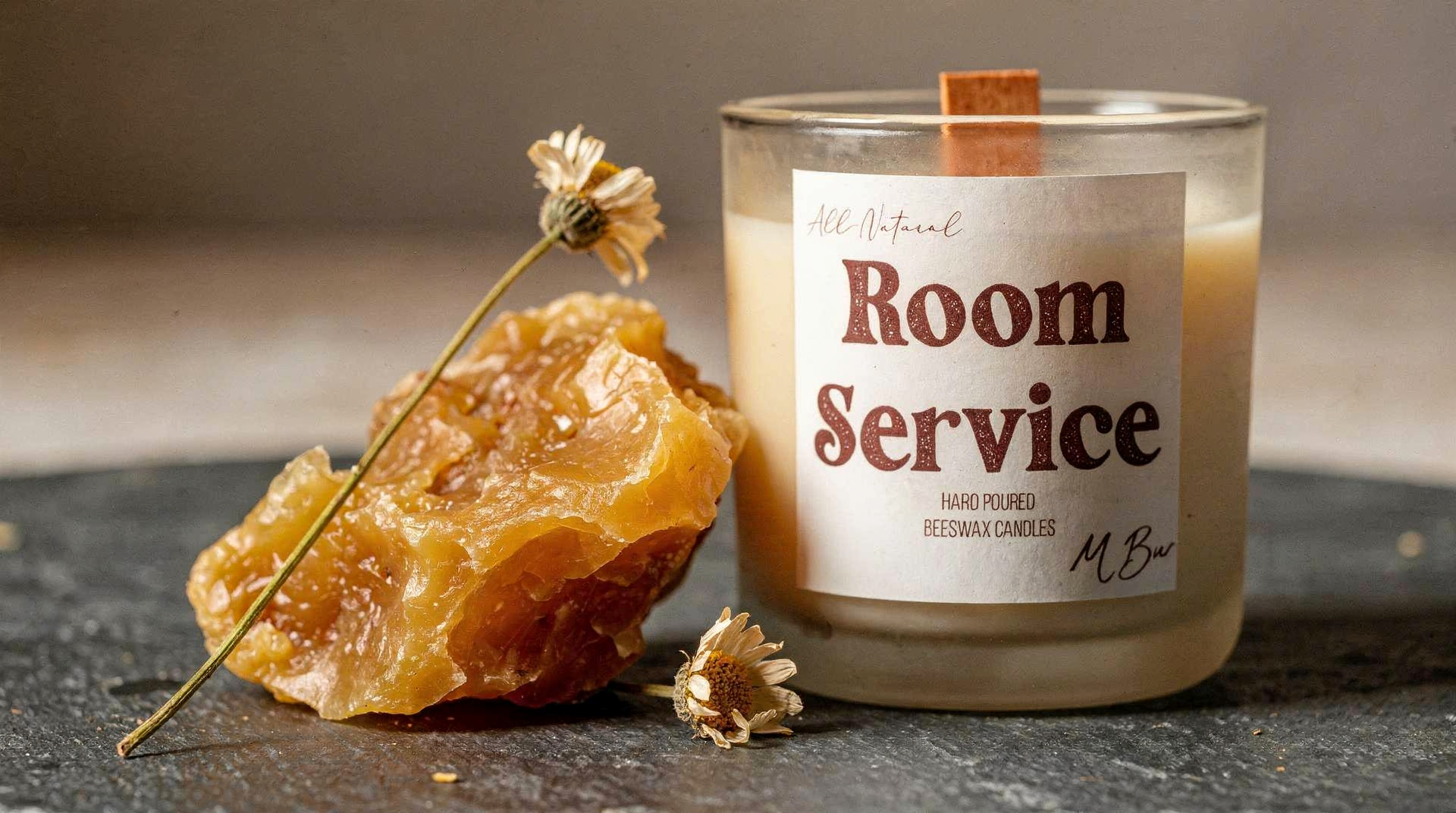
The case for hand pouring becomes genuinely compelling when the wax is 100% beeswax. Beeswax is the oldest candle material in human history. It is naturally hypoallergenic. It burns with a light spectrum closer to natural sunlight. And it is a byproduct of honey production.
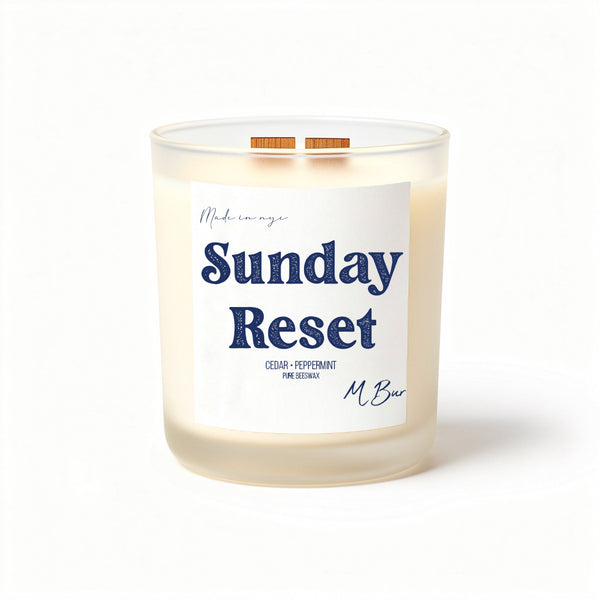
The Sunday Reset beeswax candle is a useful example of what it looks like when every element is consistent. Single ingredient beeswax, phthalate free non toxic fragrance, wooden wick, no chemical dyes. Hand poured in small batches.
What Wooden Wicks Have to Do With It
Cotton wicks are the default in mass production because they are inexpensive, uniform, and easy to handle on automated fill lines. Wooden wicks are slower to work with, require more precise centering, and need individual assessment because the grain of the wood affects how each wick burns.
The trade off is worth it. Wooden wicks produce a lower, wider flame that draws the wax pool outward more efficiently. This means less wax is left on the walls of the vessel and more fragrance release over the life of the candle. And then there is the crackling sound.
Centering a wooden wick correctly during a hand pour requires attention at the moment the wax is setting. It cannot be rushed.
How to Spot a Genuine Hand Poured Candle
Surface texture. Genuinely hand poured candles often have a slightly textured or uneven top surface. Machine filled candles are typically resurfaced after filling to produce a perfectly smooth top. That smoothness is cosmetically appealing but it is actually a sign of intervention, not quality.
Batch transparency. Does the brand tell you where the candle is made? A physical location and a small operation are good signs.
Ingredient specificity. Wax type, fragrance sourcing, wick material, dye status. If a brand cannot answer those questions, the "hand poured" label is probably doing more marketing work than it deserves.
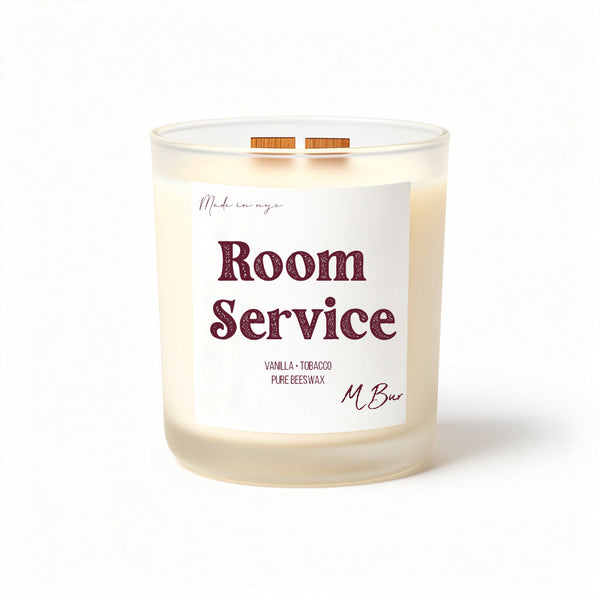
Burn time per ounce. A 12oz beeswax candle should deliver around 80 hours when properly made. The Room Service candle in the 12oz size delivers exactly 80 hours.
The Scale Trade Off
Small batch, hand poured production costs more than machine filling. Those costs pass through to the price. But beeswax burns longer per ounce than any other wax type, which means the cost per hour of burn time narrows significantly.
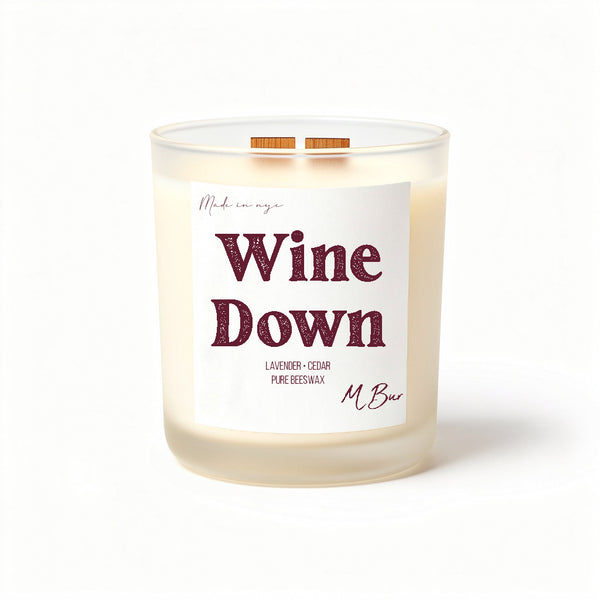
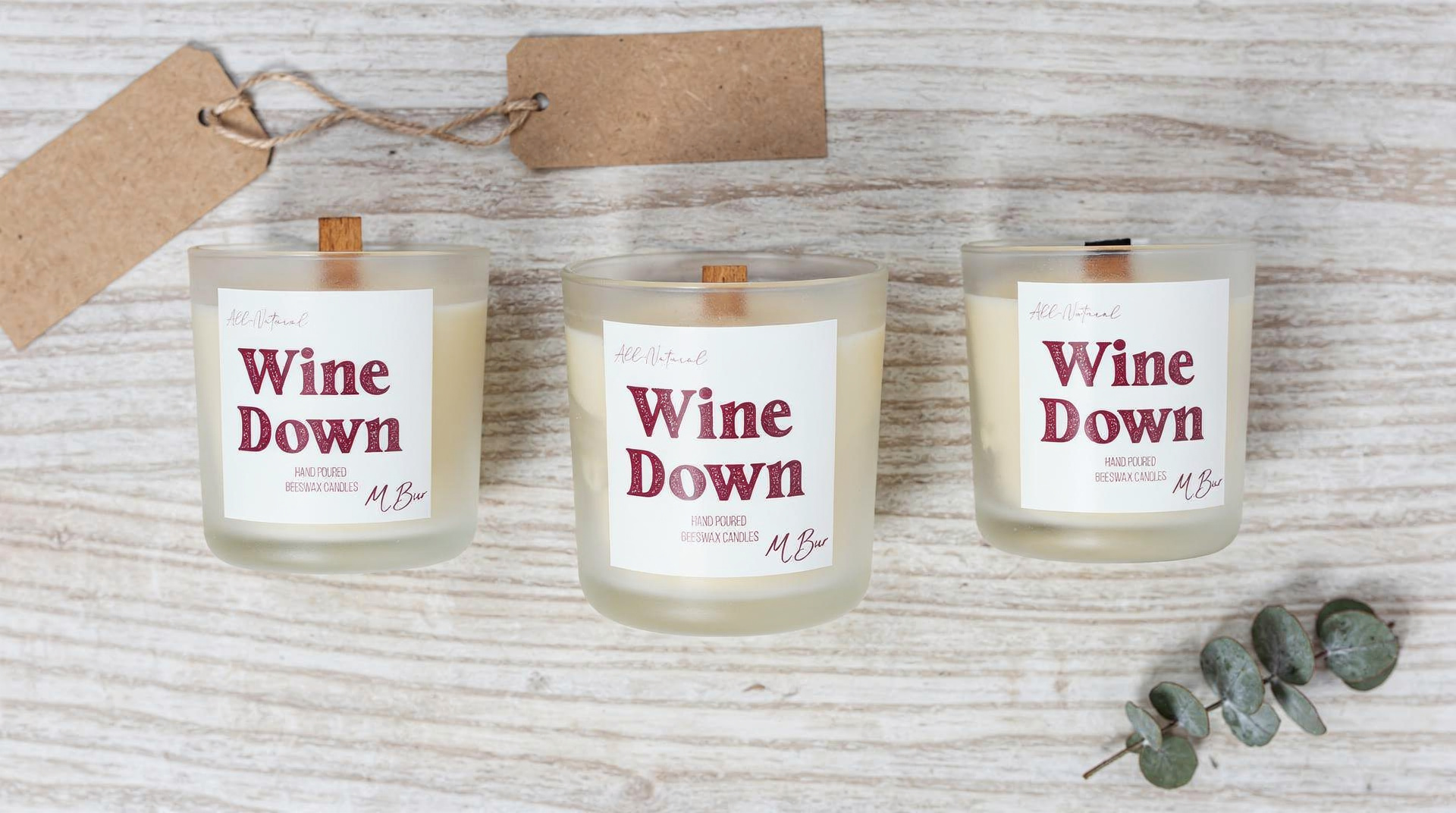
The Wine Down candle starts at $20 for the 20 hour size and scales up to $65 for the 80 hour size. At the 80 hour tier, that is 75 cents per hour of burn time. Most mass market candles run in the $25 to $35 range for 40 to 50 hours, putting them at 50 to 88 cents per hour.
"From the packaging to the burn of the candle, everything was top notch! Candle burned slowly and was exactly the amount of hours the company said it would burn. I was able to enjoy it for days even though it was the smaller size." Portia Darby, Room Service Candle
FAQ
Does hand poured really mean anything for candle quality?
It does, when the brand is using the term honestly. Pour temperature, cooling rate, and fragrance integration all affect how a candle burns and smells. The key is to look for ingredient transparency alongside the hand poured claim.
Are all hand poured candles non toxic?
No. A candle can be hand poured and still contain paraffin wax, toxic fragrance compounds, metal core wicks, or chemical dyes. The production method and the ingredient list are separate questions.
How long does it actually take to hand pour a candle?
A single small batch pour from melt to set takes several hours with beeswax. The physical hands on time is maybe 20 to 30 minutes per batch, but the full process from start to finish is a half day commitment minimum.
Why do some hand poured candles have an uneven top?
That texture is a natural result of the wax contracting as it cools. It is more visible in beeswax because of its higher melting point. An imperfect top is not a quality defect.
Can I tell by looking at a candle whether it was genuinely hand poured?
Sometimes. Natural surface variation and a visible wick that is centered but not perfectly mechanical looking are good signs. But the most reliable indicator is the brand itself. Where is it made? What is in it? Can you contact someone who made it?
The Bottom Line
"Hand poured" is a meaningful claim when it is backed by a real process, real ingredients, and a producer who can explain exactly what they do and why. It is an empty claim when it is used to evoke craft without actually practicing it.
The difference shows up in how a candle burns, how long it lasts, how the scent performs across the life of the candle, and whether the air in your room is actually better or slightly worse for having burned it.
Shop the full MBur beeswax candle collection
What buyers say:
Related reading:

