

Paraffin vs. Beeswax vs. Soy: Which Candle Wax Is Safest for Indoor Air Quality?
Paraffin vs. Beeswax vs. Soy: Which Candle Wax Is Safest for Indoor Air Quality?
You light a candle to unwind. Twenty minutes later your throat feels scratchy, your eyes are watering, and you have a low grade headache settling in behind your temples. Sound familiar? That reaction is not random, and it is not you being dramatic. It is chemistry.
The candle wax burning in your living room is doing something to your air. The question is what, exactly, and whether your current candle is helping or hurting. In this post we are going to break down paraffin, soy, and beeswax side by side on indoor air quality, so you can make an informed call before you light another one. By the end, you will know exactly which wax is cleanest, which corners the market cuts, and which candle is worth buying for your actual health.
If you are already dealing with allergies or chemical sensitivities, you may also want to read our guide to the best beeswax candles for allergy sufferers for specific product picks tailored to sensitive airways.
Why Candle Wax Indoor Air Quality Actually Matters
We spend roughly 90% of our time indoors. The EPA has found that indoor air can be two to five times more polluted than outdoor air. Candles are not the only culprit, but they are a direct, preventable source of airborne particulates and chemical compounds in your home.
When wax burns, it does not just disappear. It releases combustion byproducts into the air you are breathing right now. What those byproducts are depends almost entirely on what the wax is made from. Petrochemical wax produces petrochemical emissions. Plant based or natural waxes produce a fundamentally different profile. The difference is not subtle.
So let us go wax by wax.
Paraffin Wax: The Default Choice With a Real Cost
What It Is
Paraffin is a byproduct of petroleum refining. It is what is left over after crude oil is processed for gasoline, diesel, and other fuels. It is cheap, widely available, and holds fragrance well, which is why it ended up in roughly 95% of mass market candles.
What It Does to Your Air
Here is the part that matters. When paraffin burns, it releases volatile organic compounds including toluene and benzene. Both are classified as known carcinogens by the EPA. One peer reviewed study found that burning paraffin candles in a small, unventilated room can push indoor particulate matter above EPA outdoor air quality standards. The chemical profile of paraffin emissions has been compared in research to diesel exhaust fumes.
Paraffin also produces black soot, the PM2.5 fine particulate matter that travels deep into lung tissue. Studies have found that paraffin candles emit up to 100 times more soot than soy or beeswax alternatives. That black ring that forms inside the jar? That is going somewhere, and it is not just your walls.
The Fragrance Problem
Paraffin gets worse when you add toxic fragrance to the equation, which almost every mass market brand does. The combination of petrochemical combustion and synthetic fragrance compounds creates a particularly aggressive indoor air quality problem. This is the specific combination responsible for the headaches, eye irritation, and respiratory responses that scented candle skeptics cite constantly.
Yankee Candle, the category leader, uses premium paraffin wax across its core line. Their Large Jar Candle (22 oz, $31 to $34) delivers an impressive burn time of 110 to 150 hours and a strong scent throw. But the wax is still petroleum derived, and the fragrance load is high. The black soot ring on the jar tells the full story.
Soy Wax: Cleaner, But Read the Fine Print
What It Is
Soy wax is made from hydrogenated soybean oil. It became popular in the 1990s as a plant based alternative to paraffin, and for good reason. It burns cooler, throws scent well, and is biodegradable. The wellness candle market gravitating toward soy was not wrong.
What the Research Actually Says
A 2009 study from South Carolina State University found that soy wax does not release the benzene and toluene emissions associated with paraffin combustion. Soy candles also produce approximately 90% less soot than paraffin. From a raw air quality standpoint, that is a meaningful improvement.
But soy has a labeling problem. A candle can legally be marketed as a soy candle while containing a significant percentage of paraffin, as long as soy is the primary ingredient. Unless the label says 100% soy wax, you may be burning a blend. And blended candles carry blended risks.
The GMO and Pesticide Question
Most commercial soy in the United States is genetically modified and grown with pesticide application. The combustion impact of pesticide residues in soy wax is considered negligible compared to petroleum emissions, but it is worth knowing. If sourcing matters to you, look for non GMO soy specifically called out on the label.
P.F. Candle Co. is a solid soy option. Their 7.2 oz Standard Soy Jar Candle runs $24.00, burns for 40 to 50 hours, and uses phthalate free fragrance oils with cotton core wicks. It is a legitimate step up from paraffin in terms of clean burning. The scent library is good and the aesthetic is clean. For people who want better air quality without going all the way to beeswax, P.F. is a reasonable middle ground.
Beeswax: The Oldest Candle Material Is Still the Cleanest
What It Is
Beeswax has been used as a candle material for roughly 5,000 years. It is secreted by honeybees to build honeycombs and is collected as a byproduct of honey production. It requires no chemical processing to become a candle ready wax. What you see is what you get: a single ingredient, naturally derived, with no industrial chemistry required.
The Cleanest Burn Profile of Any Wax
Beeswax burns with virtually no soot and no toxic VOC emissions. There is no petroleum being combusted, no synthetic compound being aerosolized. The light spectrum produced by a beeswax flame is the closest of any candle wax to natural sunlight, which is why beeswax candles produce that distinctively warm, rich glow.
Beeswax also has the highest melting point of any candle wax, which is directly responsible for its exceptional burn time. MBur candles, for example, burn up to 80 hours in the 12 oz size, which is longer than almost anything else you will find in the market at a comparable price point. Higher melting point equals slower burn equals more hours per candle.
The Negative Ion Question
Beeswax is widely cited as the only wax that emits negative ions when burned. These negatively charged particles are said to bond with positively charged airborne contaminants like dust, pollen, pet dander, and mold spores, causing them to fall out of the air rather than circulate. Many users report noticeably cleaner air and reduced allergy symptoms after switching to beeswax candles.
To be accurate: while the negative ion mechanism is well documented in atmospheric science, the specific quantitative impact of a single candle on room air quality has not been as rigorously studied as mechanical air filtration. The effect appears real and is consistently reported by users, but we will put it in the category of promising evidence rather than definitive clinical proof.
What is definitive: beeswax does not release benzene, toluene, or PM2.5 soot. That alone puts it in a different category from paraffin for anyone thinking about candle wax indoor air quality.
Big Dipper Wax Works makes a straightforward 100% pure beeswax option. Their small pillar runs around $14.00 for an unscented option sourced from Northwest beekeepers. It burns cleanly and delivers that natural honey and wildflower scent without any added fragrance. A solid pick if you want beeswax with no frills.
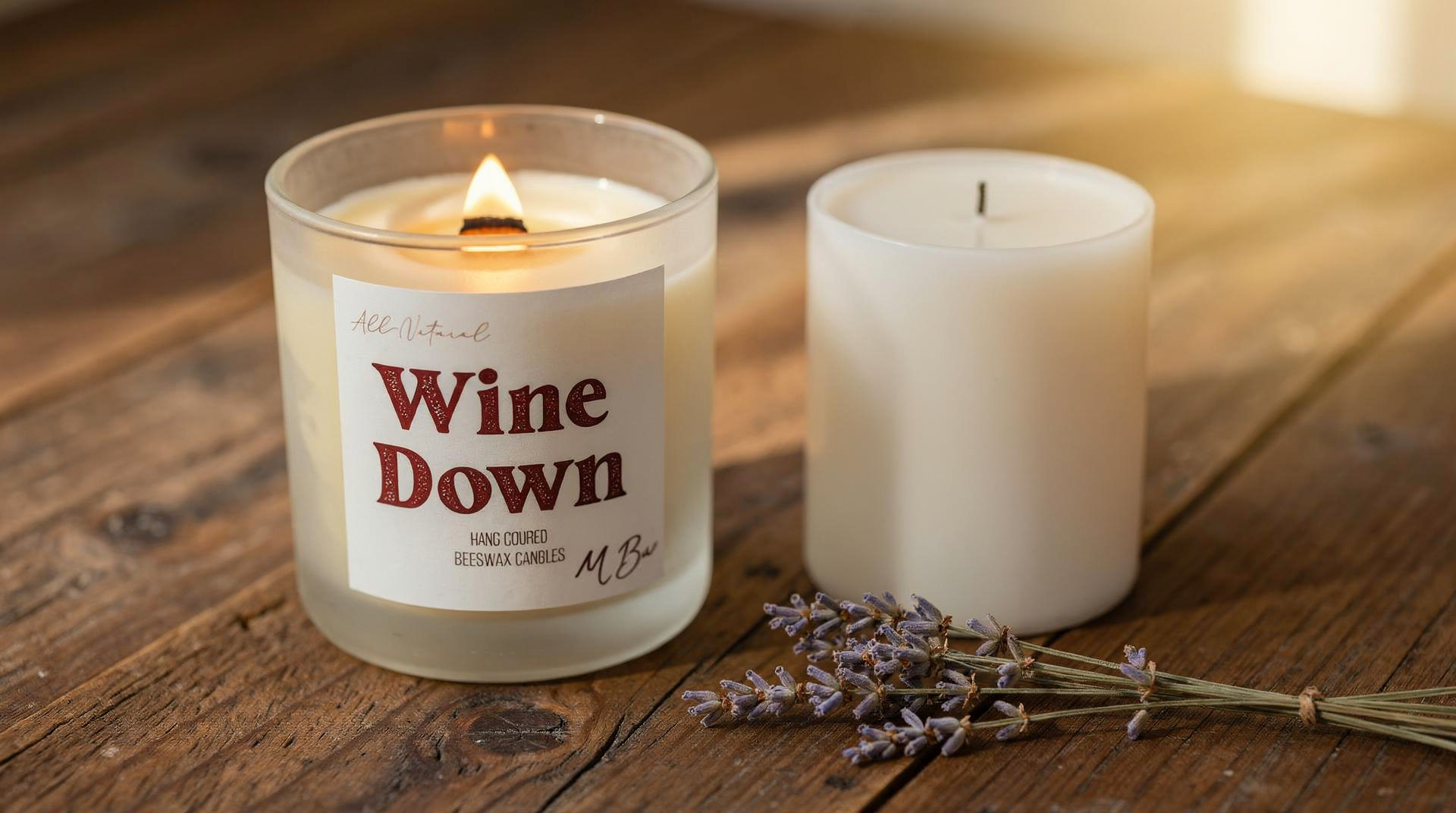
But if you want beeswax that actually smells like something interesting, that is where MBur comes in. Our Wine Down beeswax candle (starting at $20 for the 20 hour size) uses 100% beeswax, a wooden wick, and phthalate free fragrance, nothing else. No paraffin blend, no toxic fragrance, no chemical dyes. Just a candle that smells like a spa and does not punish your lungs for it.
"A lot of other candles tend to give me headaches, but this one was a total game changer. I was able to enjoy the calming aroma without any discomfort. It made my space feel cozy and refreshed at the same time." Nicole D., verified buyer, Wine Down Candle (5 stars)
Side by Side Comparison: Paraffin vs. Soy vs. Beeswax
| Category | Paraffin | Soy | Beeswax |
|---|---|---|---|
| Wax Source | Petroleum byproduct | Hydrogenated soybean oil | Natural honeycomb secretion |
| VOC Emissions | High (benzene, toluene) | Low (no benzene/toluene) | Virtually none |
| Soot Output | High (PM2.5 particulates) | 90% less than paraffin | Near zero |
| Air Quality Impact | Negative (carcinogen release) | Neutral to slightly positive | Neutral to positive (negative ion emission) |
| Allergy Risk | High | Low to moderate | Low (naturally hypoallergenic) |
| Burn Time | Moderate to long | Moderate | Longest of any wax |
| Cost Per Ounce | ~$1.50/oz (Yankee) | ~$3.33/oz (P.F. Candle Co.) | ~$4.00+/oz (Big Dipper) to $5.00/oz (MBur) |
| Labeling Traps | Often blended, rarely disclosed | "Soy" may mean blended with paraffin | Look for "100% beeswax" specifically |
| Best For | Budget buyers who do not prioritize air quality | Clean ish burn with strong scent options | Allergy sufferers, clean air, long burn |
Our Beeswax Candle Picks for Clean Air
If you have read the comparison above and decided beeswax is the move, here are the specific candles we recommend based on what people typically look for when they make the switch:
Best for Relaxation: MBur Candle Co. Wine Down
The Wine Down beeswax candle is the most popular first purchase for people switching from conventional candles. Lavender, chamomile, and sage with cedar and sandalwood undertones. Gentle enough for sensitive noses, strong enough to fill a room.
Why it wins on air quality: 100% beeswax, zero soot, phthalate-free fragrance, wooden wick
Scent profile: Lavender, chamomile, sage, cedar, and sandalwood
Price: From $20 (20hr) | $23 (40hr) | $37 (55hr)
Best for Everyday Ambiance: MBur Candle Co. Room Service
If you want something warmer than lavender, the Room Service beeswax candle delivers luxury hotel scent without the paraffin and synthetic fragrance that hotel candles actually use. Vanilla and tobacco with saffron and orchid notes.
Why it wins on air quality: Same clean beeswax base, strong scent throw achieved entirely through phthalate-free oils
Scent profile: Vanilla, tobacco, saffron, orchid, and tonka bean
Price: From $20 (20hr) | $23 (40hr) | $37 (55hr)
Best for Fresh and Clean: MBur Candle Co. Sunday Reset
For people who associate candle scent with headaches and want something that reads as "clean air" rather than "perfume," the Sunday Reset beeswax candle is the reset button. Eucalyptus and peppermint with cedar undertones.
Why it wins on air quality: Fresh, light scent profile that does not overwhelm, same zero-soot beeswax base
Scent profile: Eucalyptus, peppermint, cedar, and vanilla
Price: From $20 (20hr) | $23 (40hr) | $60 (80hr)
The Real Risk Factors: It Is Not Just the Wax
Wax type is the biggest variable in candle air quality, but it is not the only one. Here is what else matters.
Fragrance Composition
Toxic fragrance compounds, particularly phthalates, are among the most common indoor air quality culprits in candles. Phthalates are endocrine disruptors that aerosolize when candles burn. Many mass market candles, including most paraffin and some soy options, use phthalate containing fragrance. Look for phthalate free fragrance specifically. All MBur candles use phthalate free fragrance exclusively.
Wick Material
Cotton wicks are the standard clean option. Metal core wicks, which were common in older candles and are still found in some imports, can release trace amounts of heavy metals including lead when burned. Wooden wicks, like those used in every MBur candle, are another clean option that burns efficiently and produces that satisfying soft crackle.
Chemical Dyes
Artificially colored candles often use petroleum derived dyes that release additional compounds during combustion. If your candle is bright red or vivid blue, ask what made it that color. MBur candles contain no chemical dyes.
Room Ventilation
Even the cleanest candle should be burned in a reasonably ventilated space. A beeswax candle in a sealed, airless room is still better than paraffin, but cracking a window does not hurt anything.
How to Choose a Clean Candle: A Practical Checklist
Before you buy another candle, run through this list:
- Does the label say 100% beeswax or 100% soy? Not just "beeswax blend" or "soy blend."
- Is the fragrance phthalate free? If the brand does not say, assume it is not.
- Does it use cotton or wooden wicks? Avoid metal core wicks entirely.
- Are there chemical dyes? If the wax is a saturated, vivid color, that is a flag.
- Is the brand transparent about ingredients? Vague or missing ingredient information is a red flag.
MBur checks every item on that list. 100% beeswax wax, phthalate free fragrance, wooden wicks, no chemical dyes, made by hand in Queens, NY. You can read the full ingredient philosophy on our commitment to clean candles page.
For people dealing with respiratory sensitivities specifically, our full breakdown of the best candles to burn for allergies goes deeper on which scents and formulations work best for sensitive airways.
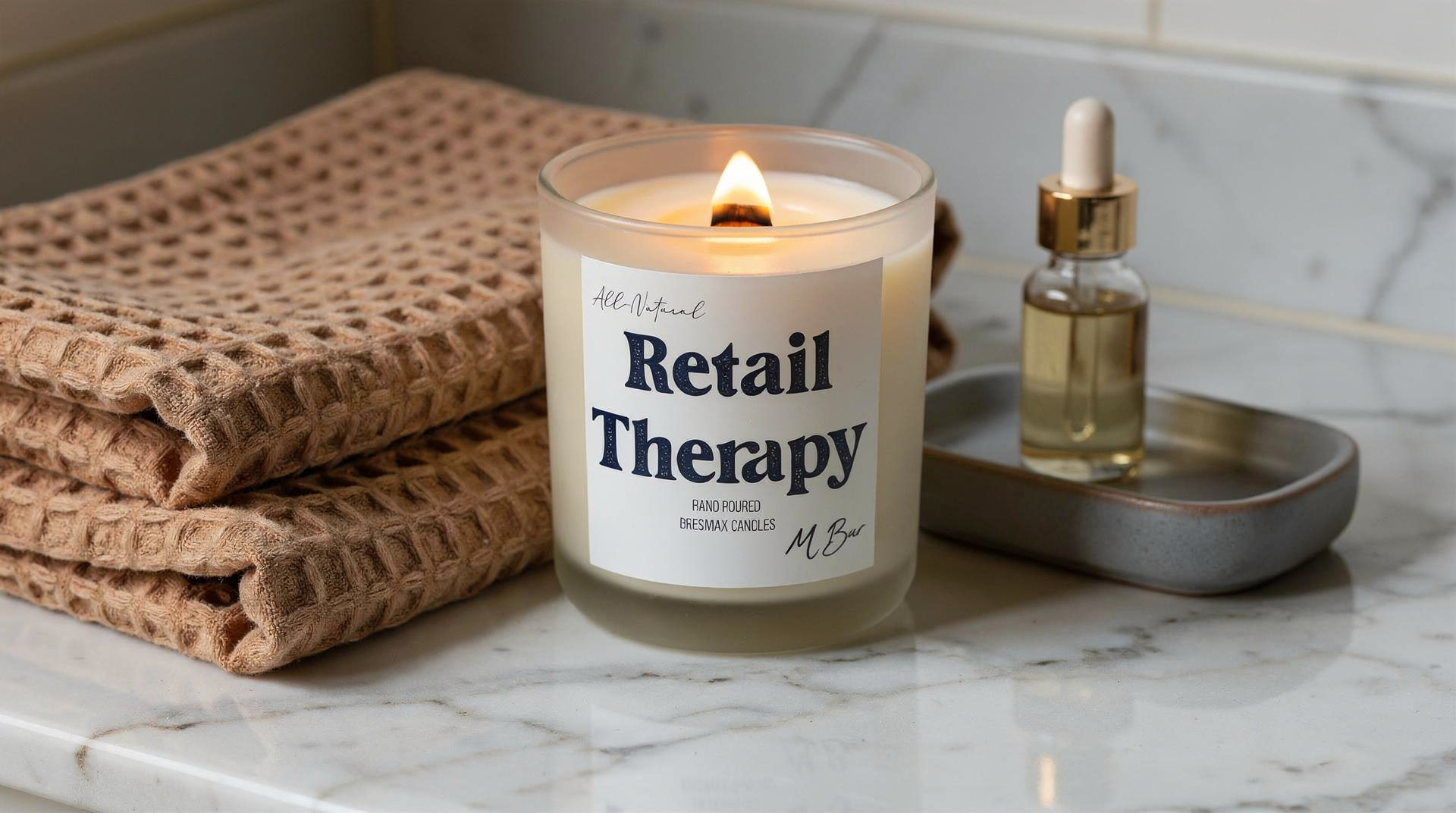
"I absolutely love these candles! I instantly notice the difference in the air quality, in comparison to the Bath and Body scented candles. I love Bath and Body's candles but I acknowledge that it caused a slight headache and other minor respiratory discomfort. Awesome products. Totally addicted." Jason H., verified buyer, Retail Therapy Candle (5 stars)
Frequently Asked Questions
Does beeswax really purify air, or is that just marketing?
The negative ion mechanism is real science. Whether a single candle meaningfully changes your room's air quality in the way a HEPA filter does is less established. What is established: beeswax emits no benzene, no toluene, and no PM2.5 soot. So at minimum, it is not degrading your air quality the way paraffin does. Many users report real improvements in how their space feels. Our beeswax candles for allergy sufferers page covers this in more detail.
Are soy candles actually non toxic?
Soy candles are significantly cleaner than paraffin in terms of VOC and soot output. The catch is that many soy candles contain paraffin blends, and most use toxic fragrance with phthalates. A 100% soy candle with phthalate free fragrance is a legitimate clean burning option. Anything less than that is a compromise.
How long do beeswax candles actually burn?
Longer than any other wax, because beeswax has the highest melting point. MBur's 12 oz beeswax candles burn up to 80 hours. Our full beeswax burn time guide breaks down what affects that number and how to maximize every hour.
Why do candles give me headaches?
Usually it is one or more of three things: paraffin combustion releasing VOCs, phthalate containing toxic fragrance aerosolizing in the air, or soot particulates irritating your respiratory tract. Switching to 100% beeswax with phthalate free fragrance eliminates all three. If you want to go deeper, read our post on why candles give you headaches.
What is the best way to try beeswax if I have never used it?
Start with a 20-hour size at $20. That gives you enough burn time to test the scent, see the zero-soot difference, and decide if you want to size up. The Wine Down candle is the most common starting point for people switching from Bath and Body Works or Yankee Candle.
The Verdict
If you care about what you are breathing indoors, the answer here is not complicated. Paraffin is petroleum waste and it burns like it. Soy is a real improvement but the blending problem and toxic fragrance issue mean you have to vet every brand individually. Beeswax is the only single ingredient wax that burns with no VOC emissions, no meaningful soot, and a natural air cleaning mechanism backed by emerging science.
The cost per ounce is higher. The burn time per candle is longer. The math on actual cost per hour of burning generally comes out even or in beeswax's favor, especially at MBur's 80 hour mark.
Our recommendation: start with the Wine Down beeswax candle if your primary goal is a calming, clean burning candle for your home. It is our most popular option for people switching from conventional candle brands.
Shop the full beeswax candle collection and find the scent that fits your space
Related reading: