
How to Store Candles Properly (Most People Get This Wrong)
Beeswax is the oldest candle material on earth, with evidence of its use dating back over 5,000 years to ancient Egypt and Rome. And yet, in all that time, nobody thought to put together a decent guide on how to keep candles from going bad before you even get to burn them. Seems like an oversight.
What customers say on Google
View on Google
The truth is, most candle storage advice floating around the internet treats candles like they are indestructible. Toss them in a drawer, stack them in a closet, leave them on a sunny windowsill because they look pretty. What actually happens is a different story: wax goes soft, scent fades, the surface blooms white, and a candle that should have burned for 80 hours barely makes it through 60.
This guide covers the real rules of candle storage, grounded in material science, not guesswork.
Why Candle Storage Actually Matters
A candle is not just wax. It is a combination of materials, each with its own tolerance for heat, light, humidity, and time.
The wax holds fragrance oils and determines how evenly the candle burns. The wick absorbs moisture and can warp if conditions are wrong. The fragrance compounds are volatile, meaning they evaporate and degrade with exposure to air, heat, and UV light. Every time you store a candle poorly, you are accelerating one or more of those processes.
Beeswax candles, specifically, have a higher melting point than paraffin or soy, which makes them more stable in warm conditions. But that does not make them immune. Heat above 85 degrees Fahrenheit can begin to soften beeswax, and prolonged sun exposure will fade and discolor even the densest wax.
The Biggest Mistake: Leaving Candles Uncovered
This is the one that catches almost everyone. A beautiful candle on a shelf looks like decor. And it is. But an uncovered candle is also a sponge for dust, airborne particles, and ambient humidity, and it is slowly off gassing the very fragrance compounds you paid for.
Fragrance oils are made of volatile aromatic compounds. Exposure to open air causes those compounds to evaporate continuously, even when the candle is not burning. A candle left uncovered for six months will smell noticeably weaker than one stored with its lid on.
The fix is simple: always store candles with their lids on, or wrapped in tissue paper or plastic wrap if no lid is available.
Temperature: The Rule of 50 to 75
Candles are temperature sensitive in both directions. Most wax types have an ideal storage temperature range of roughly 50 to 75 degrees Fahrenheit. Below that, rapid temperature changes can cause cracking and frosting. Above it, wax begins to soften and fragrance oils can migrate to the surface.
Paraffin melts at around 115 to 145 degrees Fahrenheit depending on grade. Soy is even more susceptible, with a melting point closer to 120 degrees Fahrenheit for most blends. A car in direct summer sun can reach interior temperatures of 130 to 170 degrees Fahrenheit, which is more than enough to turn either into a puddle.
Beeswax melts at around 144 to 147 degrees Fahrenheit, the highest of any common candle wax. But the practical takeaway for storage is the same regardless of wax type: keep candles away from heat sources, out of direct sun, and out of cars during any season warmer than early spring.
Light Exposure: UV Is the Quiet Destroyer
Candles are not just sensitive to heat from the sun. UV radiation causes photodegradation in both wax and fragrance compounds. A candle stored on a sunny windowsill for two months can lose a significant portion of its top notes. What is left after oxidation tends to be the heavier base notes, making the candle smell flatter and less complex.
The storage fix is straightforward: dark storage is better than light storage. A closed cabinet, a drawer, a box, a shelf behind a door.
Humidity: The Problem Nobody Talks About
High humidity affects candles in two main ways. First, wicks absorb moisture from the air. A humid wick will have trouble catching on the first light and may produce excess smoke. Second, moisture can interact with the wax surface and cause frosting, a white crystalline film that forms on the outside of the candle. Frosting is purely cosmetic and does not affect the burn, but it does make candles look old.
Beeswax naturally repels moisture better than soy or paraffin, partly because of its dense crystalline structure and natural wax esters. That said, extended exposure to damp conditions is not good for any candle. Avoid storing candles in bathrooms, near kitchen sinks, or in basement areas prone to condensation.
How Long Do Candles Actually Stay Good?
Properly stored candles do not expire the way food does, but they do degrade over time.
Paraffin candles, stored correctly, typically hold their scent for about 12 to 18 months. Soy candles can fade faster, with noticeable degradation sometimes beginning at the 6 to 12 month mark. Beeswax candles, because of the natural structure of the wax and the stability of high quality phthalate free fragrance, tend to hold up the longest, often 2 or more years when properly stored.
The wooden wicks used in MBur beeswax candles also benefit from proper storage. Wood is hygroscopic, meaning it absorbs and releases moisture based on the surrounding air. A wooden wick stored in a sealed candle with its lid on will light more consistently and produce a cleaner first burn than one left exposed to fluctuating humidity.
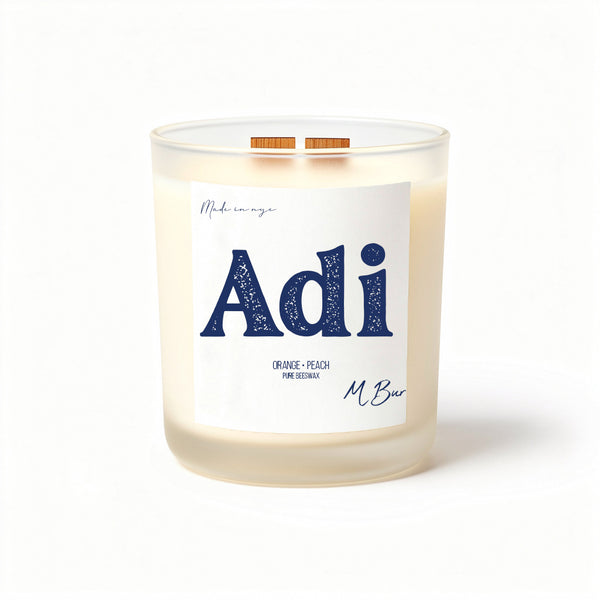
Adi Candle
$65.00
"Everything from this company is amazing so this candle matching that energy is no surprise. Will definitely be buying again." Eboni Ellis, Sunday Reset Candle
Storing Candles by Wax Type: A Quick Reference
| Wax Type | Melting Point | Heat Sensitivity | Humidity Resistance | Scent Shelf Life (Stored Properly) |
|---|---|---|---|---|
| Paraffin | 115 to 145 F | High | Low | 12 to 18 months |
| Soy | 120 to 125 F | Very High | Low | 6 to 12 months |
| Beeswax | 144 to 147 F | Moderate | High | 24 or more months |
The Do Not Refrigerate Rule
Here is a persistent myth worth killing directly: refrigerating candles does not make them burn longer or better.
Cold temperatures cause wax to contract. When a refrigerated candle returns to room temperature, the rapid expansion and contraction cycle can cause surface cracking, especially along the edges where wax meets the container wall. Refrigerators are also humid environments, and the moisture exposure is bad for both the wick and the wax surface.
Room temperature, with a lid on and out of direct light, is all you need.
Best Practices for Long Term Storage
- Always store with lids on or wrapped to prevent scent loss and dust accumulation.
- Keep temperature between 50 and 75 degrees Fahrenheit. A climate controlled interior room is ideal.
- Store away from direct and indirect sunlight. UV degrades both fragrance and wax color over time.
- Keep away from high humidity. Avoid bathrooms, kitchens, and basement storage unless conditions are well controlled.
- Store candles upright. Storing on their side can cause fragrance oil to pool unevenly in the wax.
- Do not stack heavy objects on top of candles. Wax is softer than it looks.
- Rotate your collection. If you own multiple candles, burn older ones first.
A Note on Shipping and Seasonal Buying
If you order candles online, the storage journey starts before they even reach your door. Candles shipped during summer months or to hot climates are exposed to real thermal stress in transit.
Beeswax is more resilient here than soy or paraffin because of its higher melting point, but it is still worth checking a new candle for signs of heat stress before storing it. Look for surface pooling, oil seepage, or any separation between the wax and the container wall. Minor surface irregularities are cosmetic and will burn out.
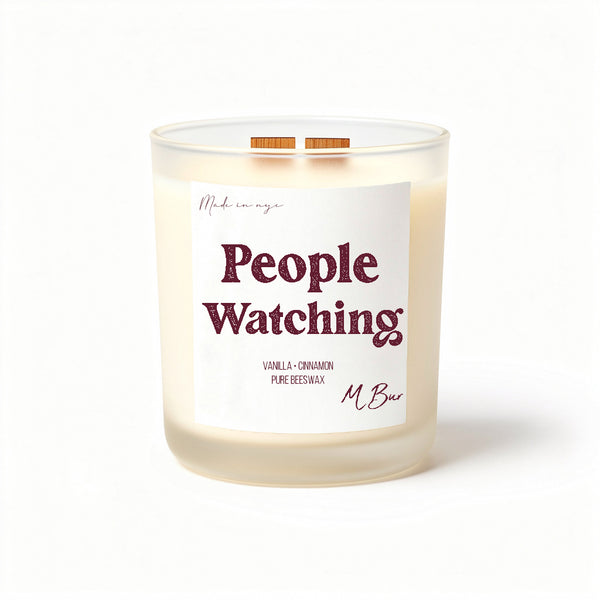
The Sunday Reset beeswax candle, like all MBur candles, uses 100% beeswax and phthalate free fragrance, which makes it more thermally stable than most candles shipping in the same price category. Unbox it promptly, get the lid back on, and keep it out of the sun until you are ready to burn it.
Frequently Asked Questions
How long can I store a beeswax candle before it goes bad?
A properly stored beeswax candle will hold its scent and structure for two or more years. Store it with the lid on, away from heat and light, at a stable room temperature, and it will be just as good the day you burn it as the day it arrived.
Is it okay to store candles in a bathroom cabinet?
Only if that bathroom stays genuinely dry. Most bathrooms experience significant humidity spikes from showers, which can dampen wicks and promote frosting on the wax surface. A bedroom drawer or linen closet is generally a better option.
Why does my candle have a white film on the outside?
That is called frosting, and it is a natural result of wax crystallization, especially in beeswax and soy. Temperature fluctuations and humidity exposure accelerate it. It is purely cosmetic, does not affect the burn, and can often be gently wiped away.
Should I cover a candle between burns?
Yes, always. Replacing the lid between burns slows scent loss, keeps dust and debris out of the wax pool, and protects the wick from humidity.
Can I store different scented candles together in the same box?
You can, but keep lids on all of them. Different fragrance compounds will cross contaminate if candles are stored open in an enclosed space.
The Bottom Line
Proper candle storage is not complicated, but it is easy to ignore until you notice that a candle you were excited about has gone flat, faded, or damaged before you ever got to enjoy it. The rules are consistent: dark, cool, dry, covered, upright. Follow those five and your candles will perform exactly as promised.
The Wine Down beeswax candle starts at $20 for the 20 hour size and goes up to $60 for the full 80 hour version. Taking two minutes to store it correctly means you burn every one of those hours at full scent load, full flame quality, and full value.
"A lot of other candles tend to give me headaches, but this one was a total game changer. I was able to enjoy the calming aroma without any discomfort." Nicole D., Sunday Reset Candle
Shop the full MBur beeswax candle collection
What buyers say:
Related reading:

