

Hormone-Safe Candles: What to Look for If You're Avoiding Endocrine Disruptors
Hormone Safe Candles: What to Look for If You're Avoiding Endocrine Disruptors
If you have been working to reduce endocrine disruptors in your beauty and household products, your candle is worth looking at next. Most conventional candles, including many that market themselves as "natural" or "relaxing," use fragrance formulations that contain the same phthalates you have been avoiding in skincare, shampoo, and cleaning products. When you burn a candle, those compounds go airborne and into your lungs, which makes them a meaningful exposure source.
This guide covers which candle ingredients actually interfere with hormones, what to look for on a label, and how to find hormone-safe candles that still smell like something you would want in your living room. Browse the full MBur beeswax candle collection if you want to start with products that already meet every criterion on the checklist below.
How Candles Actually Affect Your Hormones
Endocrine disruptors are chemicals that interfere with your body's hormone signaling. They can mimic estrogen, block androgen receptors, or disrupt thyroid function, sometimes at very low doses. The reason this matters for candles specifically is that when you burn one, you are not just smelling it. You are inhaling the chemical compounds it releases into the air, absorbing some of them through your skin, and letting them settle on every surface in your home.
The Environmental Working Group (EWG) has flagged phthalates, a class of chemicals commonly used to make fragrance last longer, as high-concern endocrine disruptors. Studies published in journals including Environmental Health Perspectives have linked phthalate exposure to hormonal disruption, reduced fertility, and thyroid irregularities. Phthalates are extremely common in candle fragrance formulations, and they are the primary ingredient to watch for.
The problem is not candles in general. It is specific ingredients that have no business being in a product you burn inside your home.
The Main Endocrine Disruptors to Watch for in Candles
Phthalates in Fragrance
Phthalates like DEP (diethyl phthalate) and DBP (dibutyl phthalate) are frequently used in fragrance formulations as fixatives, making a scent linger longer. Fragrance formulas are legally protected as trade secrets, which means brands are not required to disclose every chemical in their "fragrance" ingredient. Phthalates can be present inside a perfectly innocent-sounding "clean linen" or "vanilla dreams" scent blend with zero disclosure required.
When you burn a candle containing phthalate-laden fragrance, those compounds go airborne and into your lungs.
Paraffin Wax
Paraffin is a petroleum byproduct, the residue left over after crude oil is refined into gasoline and other fuels. When burned, paraffin releases compounds including benzene and toluene, both classified as volatile organic compounds (VOCs) and known carcinogens. Some researchers have also flagged paraffin combustion byproducts for their potential to act as hormone-disrupting agents, particularly with repeated indoor exposure. For a full comparison of how different waxes perform on air quality, see our paraffin vs beeswax vs soy breakdown.
The EPA lists benzene as a known human carcinogen with no safe level of exposure. Burning paraffin candles in a closed room regularly is a real exposure risk.
Chemical Dyes
The vivid colors in many conventional candles come from toxic dyes, some of which (particularly azo dyes) have raised concerns about hormonal interference and skin sensitization. If a candle is an unnatural color, it contains toxic colorants that you would rather not be inhaling. A hormone-safe candle should be the natural color of its wax.
Metal Core Wicks
Lead wicks were officially banned in the US in 2003, but metal core wicks containing zinc or tin still exist and release metal particulates when burned. While not direct endocrine disruptors in the same category as phthalates, metal particulate inhalation is a separate respiratory concern worth avoiding.
Why "Natural" on the Label Does Not Mean Hormone Safe
The word "natural" is not regulated in the candle industry. A brand can use it on packaging regardless of what is actually inside the jar.
Soy candles are a good example. Soy wax is often marketed as the clean, plant-based alternative to paraffin, and compared to paraffin, it is an improvement. But many soy candles are actually soy blends, meaning they contain a percentage of paraffin or other waxes alongside the soy. And many soy candles still use toxic fragrance formulations that include phthalates.
The wax type matters, but the fragrance matters just as much, and that is the ingredient most people never think to question.
If you are navigating this while also managing fragrance sensitivities, our guide to the best beeswax candles for allergy sufferers covers the overlap between clean burning and scent sensitivity.
What Hormone Safe Candles Actually Look Like
The checklist for hormone-safe candles is short. You need to verify four things.
The Hormone Safe Candle Checklist
- Phthalate-free fragrance, confirmed in writing. The brand should explicitly state "phthalate free" on their product page or FAQ. The word "natural" alone does not confirm this.
- Single-ingredient wax. 100% beeswax or 100% coconut wax are the cleanest options. If a brand lists "natural wax blend" without specifying the composition, assume paraffin is in the mix.
- No chemical dyes. Beeswax is naturally golden. Coconut wax is off-white. If a candle is a color that does not match the natural color of its wax, it contains dyes.
- Wooden or uncoated cotton wicks. No metal cores. Wooden wicks are the easiest to verify because you can see what they are.
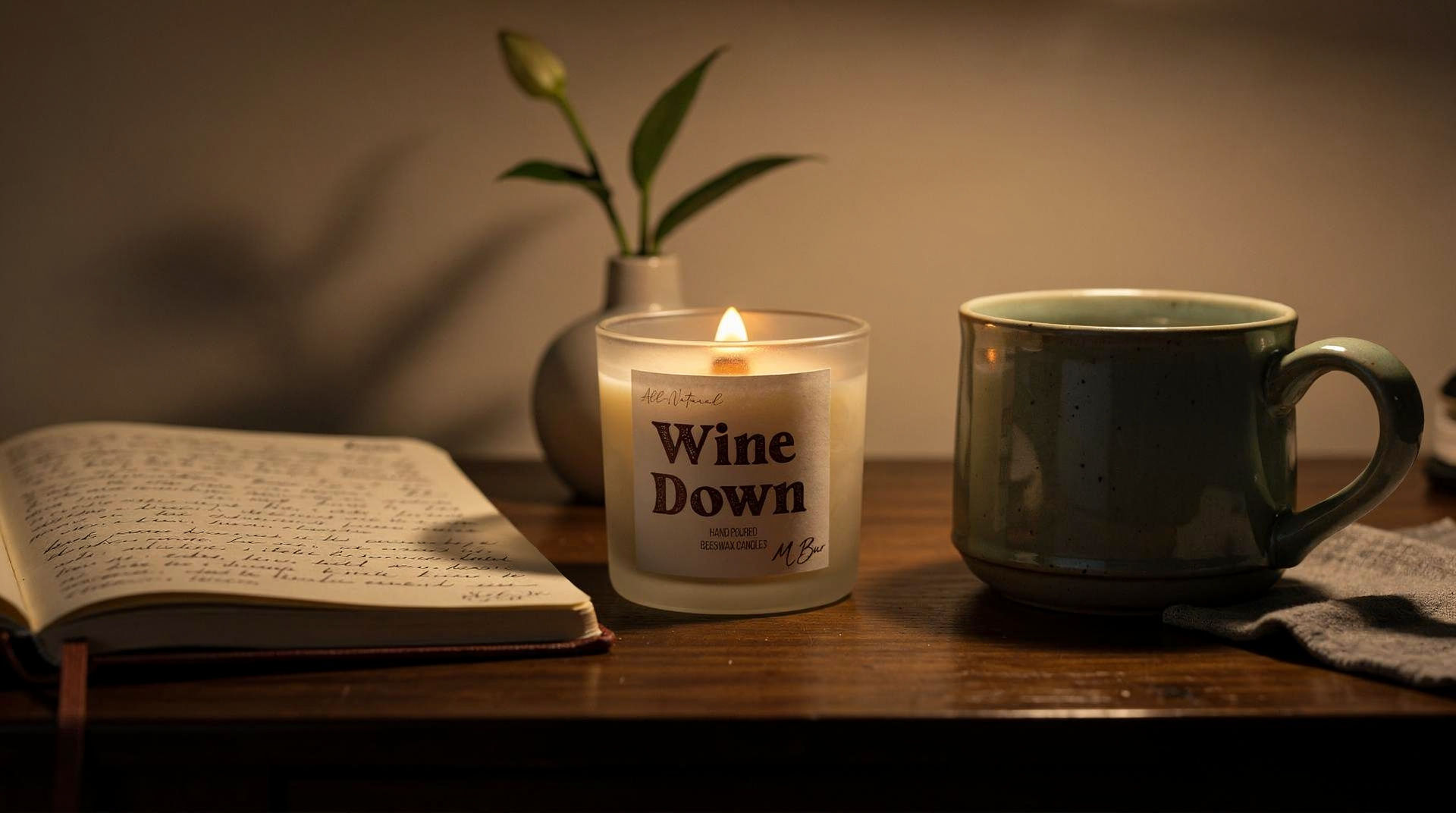
Every MBur candle meets all four criteria: 100% beeswax (not a blend), phthalate-free non-toxic fragrance oils, no chemical dyes, and wooden wicks. The Wine Down beeswax candle, with lavender, chamomile, sage, cedar, and sandalwood, is a good option for evenings when you want to unwind without questioning what you are inhaling.
"A lot of other candles tend to give me headaches, but this one was a total game changer. I was able to enjoy the calming aroma without any discomfort." Nicole D., verified buyer
Beeswax: The Original Hormone Safe Candle Wax
Beeswax has been used for candles for roughly 5,000 years, and it remains the cleanest burning candle wax available. Here is why it matters specifically for hormone health.
Beeswax is a naturally occurring substance produced by honeybees. It requires no chemical processing to become candle wax. There are no solvents, no hydrogenation, no industrial refinement.
Because of its high melting point (the highest of any candle wax), beeswax burns slower and cooler than paraffin or soy, releasing fewer combustion byproducts overall. It also emits a light spectrum closer to natural sunlight, which is why beeswax candles have that distinctive warm, golden glow.
Some studies suggest that beeswax may emit negative ions when burned, and many users report a feeling of cleaner air after burning beeswax candles in a room. While more research is needed to confirm the mechanism, the absence of the toxic byproducts that paraffin releases is itself a significant advantage for indoor air quality.
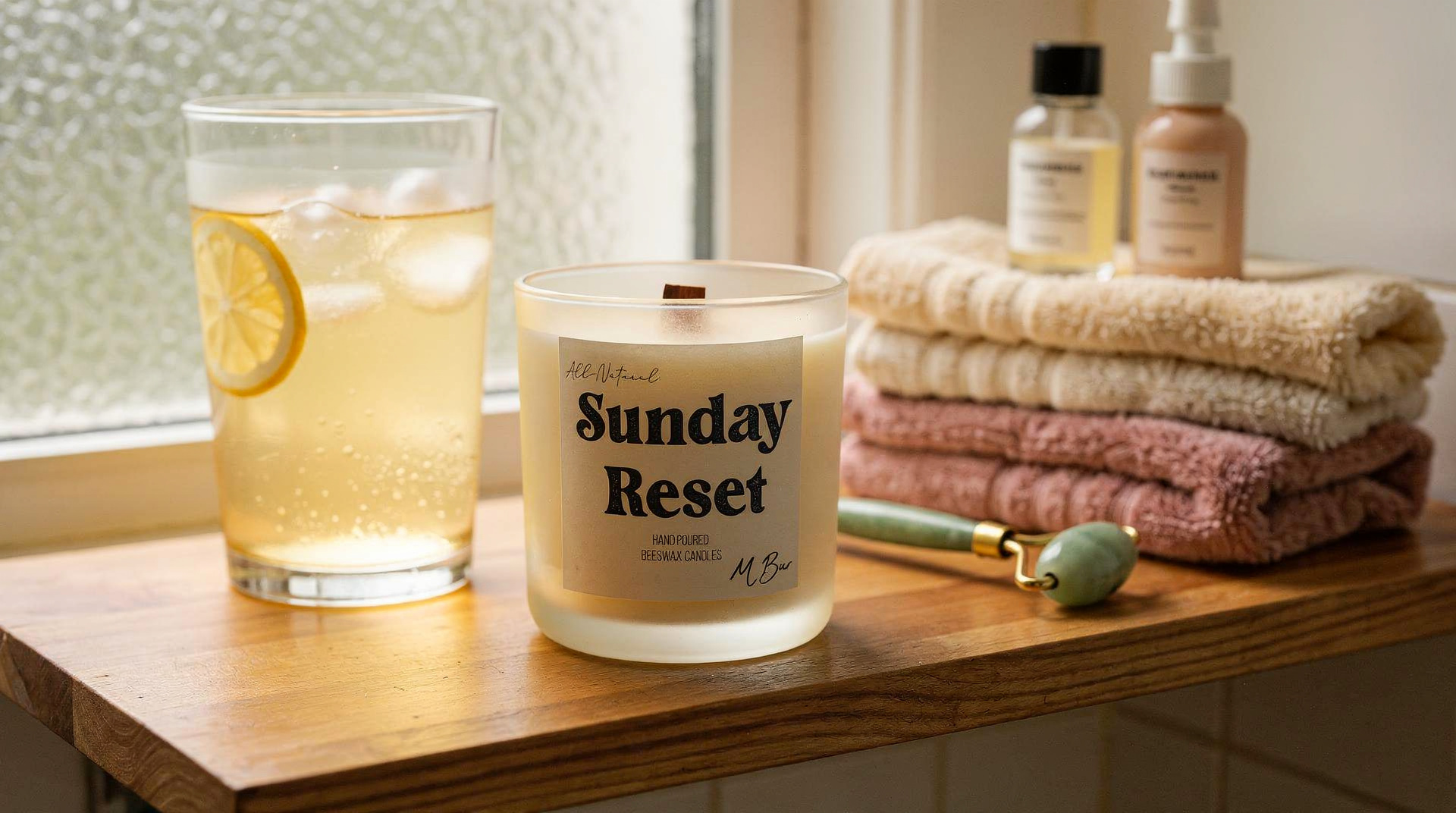
MBur uses single-ingredient 100% beeswax in every candle. The Sunday Reset beeswax candle, built around eucalyptus, peppermint, clove, cedar, and patchouli, is a clean and energizing option for daytime or workspace use.
"I absolutely love these candles! I instantly notice the difference in the air quality, in comparison to the Bath and Body scented candles. I love Bath and Body's candles but I acknowledge that it caused a slight headache and other minor respiratory discomfort. Awesome products. Totally addicted." Jason H., verified buyer
How Phthalate-Free Fragrance Works
Switching to phthalate-free fragrance does not mean switching to boring. The phthalates in conventional fragrance serve as fixatives, helping a scent last longer and project further. Brands that formulate without phthalates use higher quality aroma compounds and better formulation work to achieve the same performance.
MBur's fragrance formulations are phthalate-free across the entire line. The Retail Therapy candle opens with grapefruit and tart currants before settling into jasmine, peach, smoky black tea, and warm amber. It is a complex, layered scent that performs well without the hormone-disrupting payload of conventional fragrance formulas.
"This scent has me in a chokehold. I burn it in my room and my living room and it fills my space SOOOOO nicely... Cant say enough about how impressed I am with this company." Tiffany Gordon, verified buyer
A Quick Comparison: Wax Types and Hormone Safety
| Wax Type | Source | VOC Emissions | Endocrine Disruptor Risk | Notes |
|---|---|---|---|---|
| Paraffin | Petroleum byproduct | High (benzene, toluene) | High | Most common candle wax; avoid |
| Soy (blended) | Soybeans + paraffin mix | Moderate | Moderate to High | Often marketed as "natural"; check for blending |
| Soy (100%) | Soybeans | Low to Moderate | Low (depends on fragrance) | Better than paraffin; fragrance still matters |
| Coconut Wax | Coconut oil | Low | Low (depends on fragrance) | Clean burn; often expensive |
| Beeswax (100%) | Honeybees | Very Low | Very Low | No chemical processing; longest burn time |
100% beeswax paired with phthalate-free fragrance eliminates the two biggest sources of endocrine-disrupting compounds in conventional candles at the same time.
Frequently Asked Questions
What makes a candle an endocrine disruptor?
The main culprits are phthalates in fragrance formulations and volatile organic compounds released by burning paraffin wax. Both enter your body through inhalation during normal candle use. If your candle uses a petroleum-based wax and does not explicitly state phthalate-free fragrance, it likely contains endocrine-disrupting compounds. The full MBur collection is a good starting point if you want to eliminate both concerns.
Are all scented candles bad for hormones?
No. Scented candles made with phthalate-free fragrance and clean wax (100% beeswax or 100% coconut wax) do not carry the same endocrine-disrupting risks as conventional paraffin candles with toxic fragrance. The scent itself is not the problem. The specific chemicals used to create and preserve that scent are what matter.
How do I know if a candle is actually phthalate free?
Look for an explicit "phthalate free" claim on the product page. The word "natural" alone does not confirm this. Reputable brands will state it clearly in their product descriptions or FAQ. MBur confirms phthalate-free fragrance across the entire line.
Do beeswax candles smell good enough to actually enjoy?
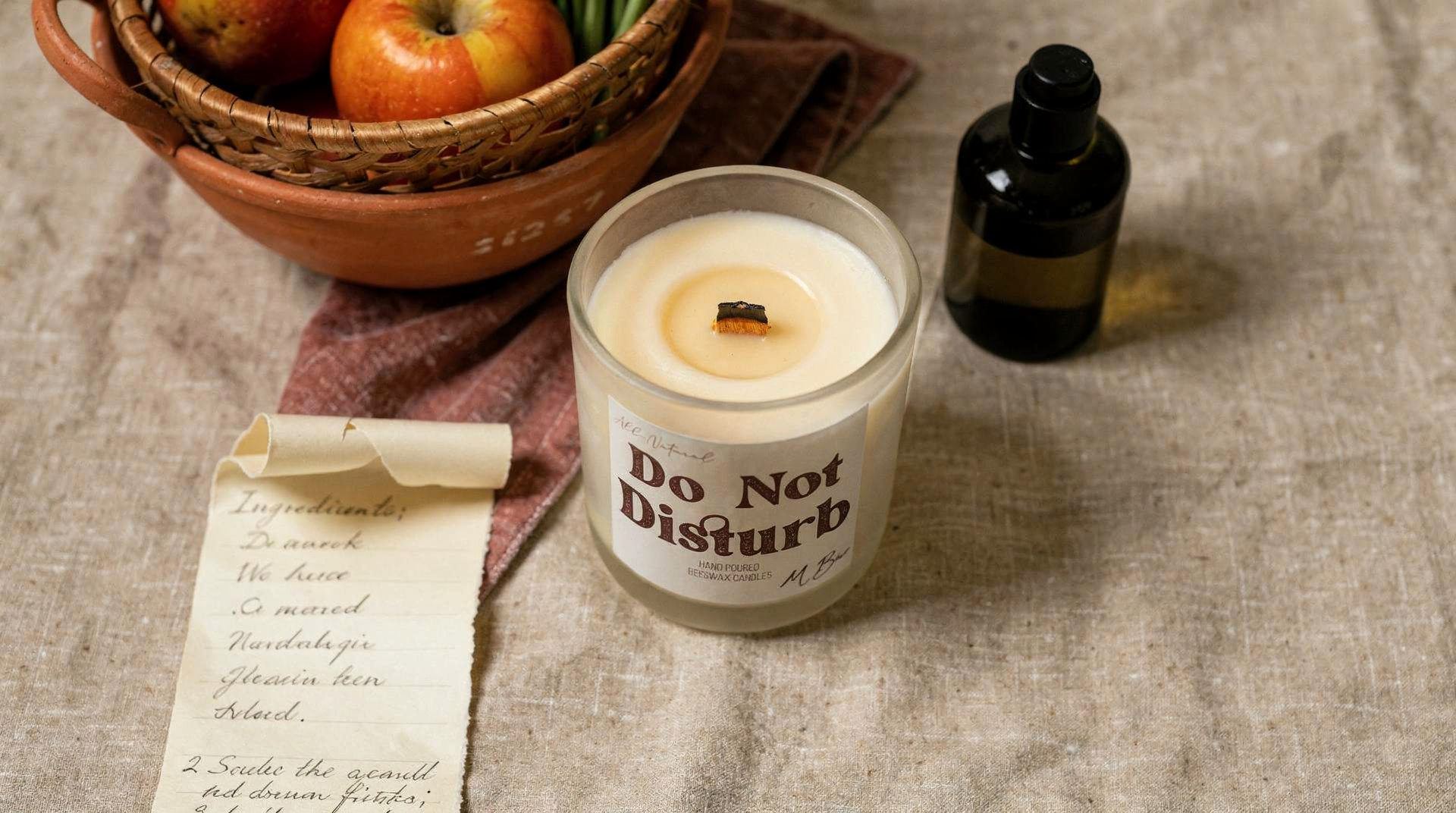
Yes. Because beeswax has a slower, cooler burn, fragrance compounds release more gradually and evenly, which often results in better scent performance over time. The Do Not Disturb beeswax candle (vanilla, sandalwood, soft pear, and peach blossom) is a good test case if you have been skeptical about clean candles delivering on scent.
What burn habits make a difference for indoor air quality?
Even with a clean candle, a few practices help. Trim your wooden wick to about 1/4 inch before each burn to prevent large flames and excess carbon. Burn in a ventilated room when possible. Limit burns to three to four hours at a time. Let the candle reach a full melt pool on the first burn so it does not tunnel. These habits apply regardless of wax type, but they matter more with conventional candles because they reduce your total exposure time. For more on candle soot specifically, see our guide on candle soot and your health.
The Bottom Line on Hormone Safe Candles
A hormone-safe candle uses 100% single-ingredient wax (beeswax is the cleanest option), phthalate-free non-toxic fragrance, no chemical dyes, and a wooden or cotton wick with no metal core. Those four criteria eliminate the primary sources of endocrine-disrupting compounds in conventional candles.
MBur Candle Co. meets all four. 100% beeswax, phthalate-free non-toxic fragrance oils, wooden wicks, no dyes, handmade in Queens, NY. The Wine Down beeswax candle (lavender, chamomile, sage, cedar, sandalwood) starts at $20 for the 20-hour size.
Shop the full collection of phthalate-free beeswax candles
Related reading: