

Are Candles Bad for Babies? What New Parents Should Know
Are Candles Bad for Babies? What New Parents Should Know
You finally got the baby down. The nursery is quiet, the baby monitor is on, and you want to light a candle because you are a human being who deserves one nice thing. Then the thought hits you: is this actually safe? Is the candle doing something bad to the air my baby is breathing?
It is a completely reasonable thing to wonder. Newborns breathe faster than adults, their lungs are still developing, and their indoor air quality matters more than most of us realize. So let us actually answer the question, not with vague reassurances, but with specifics. By the end of this post you will know exactly which candles are genuinely risky around babies, which ones are not, and what to look for if you want to keep burning without the worry.
If you are already looking for a place to start, the full MBur Candle Co. collection is built on 100% beeswax with no toxic fragrance. But let us get into why that actually matters.
The Real Concern: It Is Not Candles. It Is What Is In Them.
Here is the thing most articles get wrong. They frame this as a candles vs. no candles question. The real question is a wax question, a fragrance question, and a wick question. Those three variables determine whether a candle is genuinely risky or basically fine around infants.
A 2001 study published in the journal Regulatory Toxicology and Pharmacology found that paraffin candles release measurable levels of volatile organic compounds (VOCs) including benzene, toluene, and formaldehyde when burned. The EPA has also identified paraffin combustion as a source of indoor air pollutants. That is a real concern, full stop, especially in a small room like a nursery where air circulates less freely.
Paraffin wax is a petroleum byproduct. It is what most grocery store and mass market candles are made of. When it burns, it releases VOCs and soot particles that can linger in indoor air. For adults with healthy respiratory systems, the occasional exposure is unlikely to cause problems. For infants with developing lungs, it is a different calculation.
The American Academy of Pediatrics has consistently recommended reducing indoor air pollutants in spaces where babies sleep and spend time. Candle soot and VOCs fall squarely into that category.
The Three Variables That Determine Candle Safety for Babies
1. The Wax
Paraffin is the problem. It is derived from petroleum refining, and burning it produces soot and chemical byproducts that you do not want concentrated in a nursery. Soy wax is a step up, it is plant based and burns with less soot, but the market is full of soy blends that still contain paraffin. If the label just says soy blend, there is likely paraffin in there.
Beeswax is the cleanest burning option. It is a naturally occurring wax produced by bees during honey production, which means it requires no chemical processing to manufacture. It has the highest melting point of any candle wax, which translates to a slower, more complete burn with minimal soot output. It is also naturally hypoallergenic, which is exactly what you want around a baby whose sensitivities you are still figuring out.
2. The Fragrance
This is the one people underestimate. Many popular candles use toxic fragrance blends that contain phthalates, which are chemical compounds used to make scents linger longer. Phthalates are endocrine disruptors. They have been associated with hormonal interference in studies on infants and young children. The Environmental Working Group (EWG) has flagged phthalates as a significant concern in household products, and candle fragrance is one of the common delivery mechanisms.
Even candles that market themselves as natural or clean can carry toxic fragrance oils if the brand has not specifically committed to phthalate free formulations. You have to check the label or contact the brand directly.
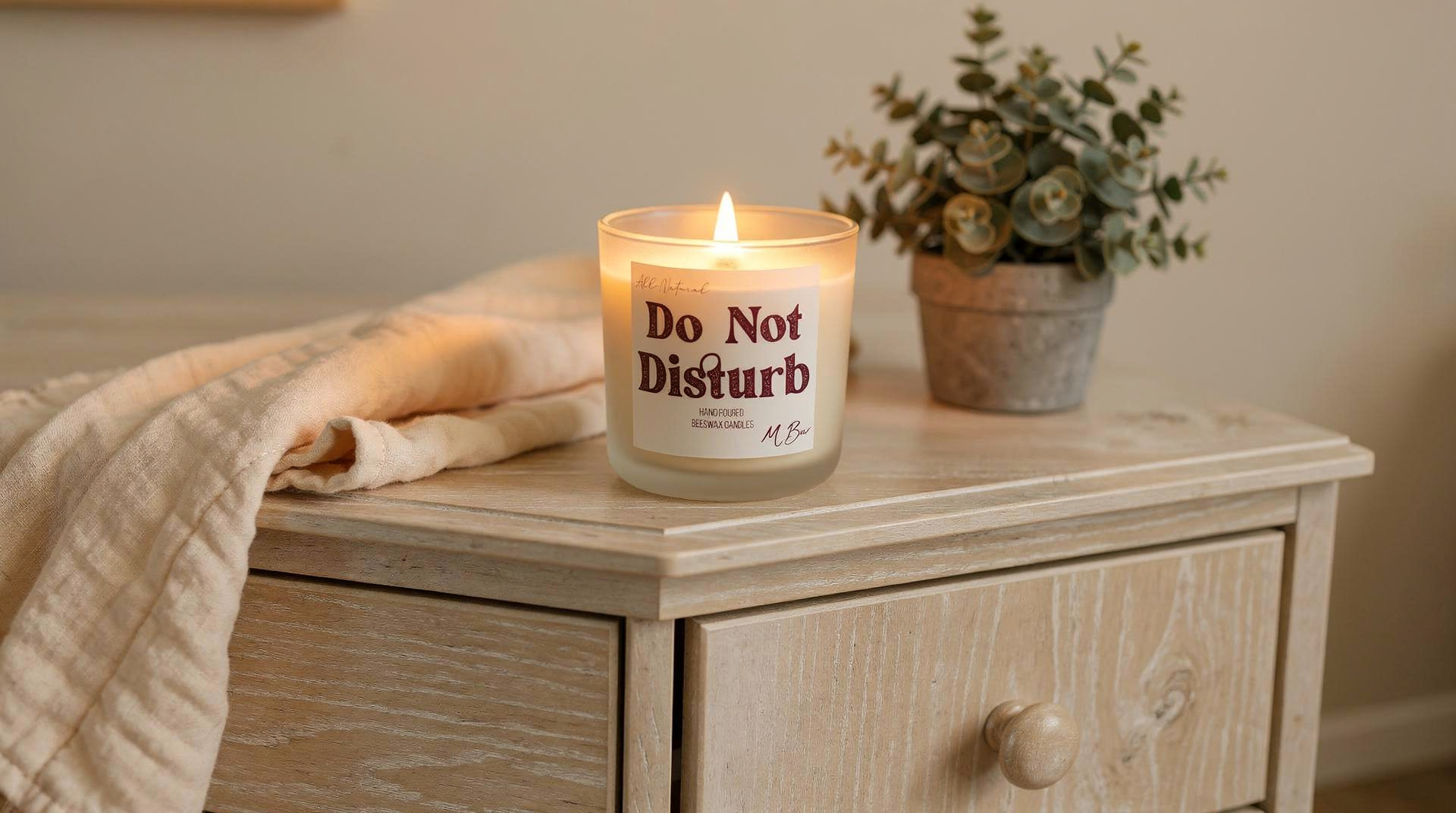
The Do Not Disturb beeswax candle from MBur uses phthalate free fragrance and contains no chemical dyes. It was designed for bedrooms and sleep environments, which makes it one of the more sensible options for parents who want scent in or near a nursery. The 20 hour size starts at $20, which is an easy way to try a single candle before committing to a larger size.
3. The Wick
Cotton and wood wicks are safe. Metal core wicks are not. Some cheaper candles use wicks with zinc or tin cores to help them stand upright, and while lead core wicks were banned in the US in 2003, metal core wicks in general can still release trace metals when burned. Stick to candles that specify cotton or wooden wicks, and you eliminate that risk entirely.
What the Research Actually Says About Beeswax and Indoor Air
Some sources claim that beeswax candles release negative ions that actively purify the air. The science on that specific claim is limited and largely anecdotal, so we are not going to make that case here. What the research does support is this: beeswax burns more completely than paraffin, produces significantly less soot, and does not introduce petroleum derived VOCs into the air when burned.
For a nursery environment, that difference is meaningful. Less soot means fewer airborne particles settling on surfaces and in the air your baby inhales during sleep. Less chemical off gassing means you are not layering an additional pollutant source on top of whatever else is already in your indoor air.
If you want to go deeper on the wax comparison, our post on paraffin vs. beeswax vs. soy candle wax and indoor air quality breaks down the research in full detail.
"I love Bath and Body's candles but I acknowledge that it caused a slight headache and other minor respiratory discomfort. Awesome products. Totally addicted." Jason H., verified MBur customer
Jason is an adult with a fully developed respiratory system. The discomfort he experienced from conventional candles is worth keeping in mind when thinking about a baby's environment, where the stakes are higher and the lungs are newer.
Where You Burn Matters as Much as What You Burn
Even a clean burning beeswax candle should not be burned directly in a baby's room while the baby is sleeping. This is not about the wax. It is about fire safety and basic air circulation. Any open flame adds combustion products to a room, even at trace levels, and a nursery with a sleeping infant is not the place to experiment.
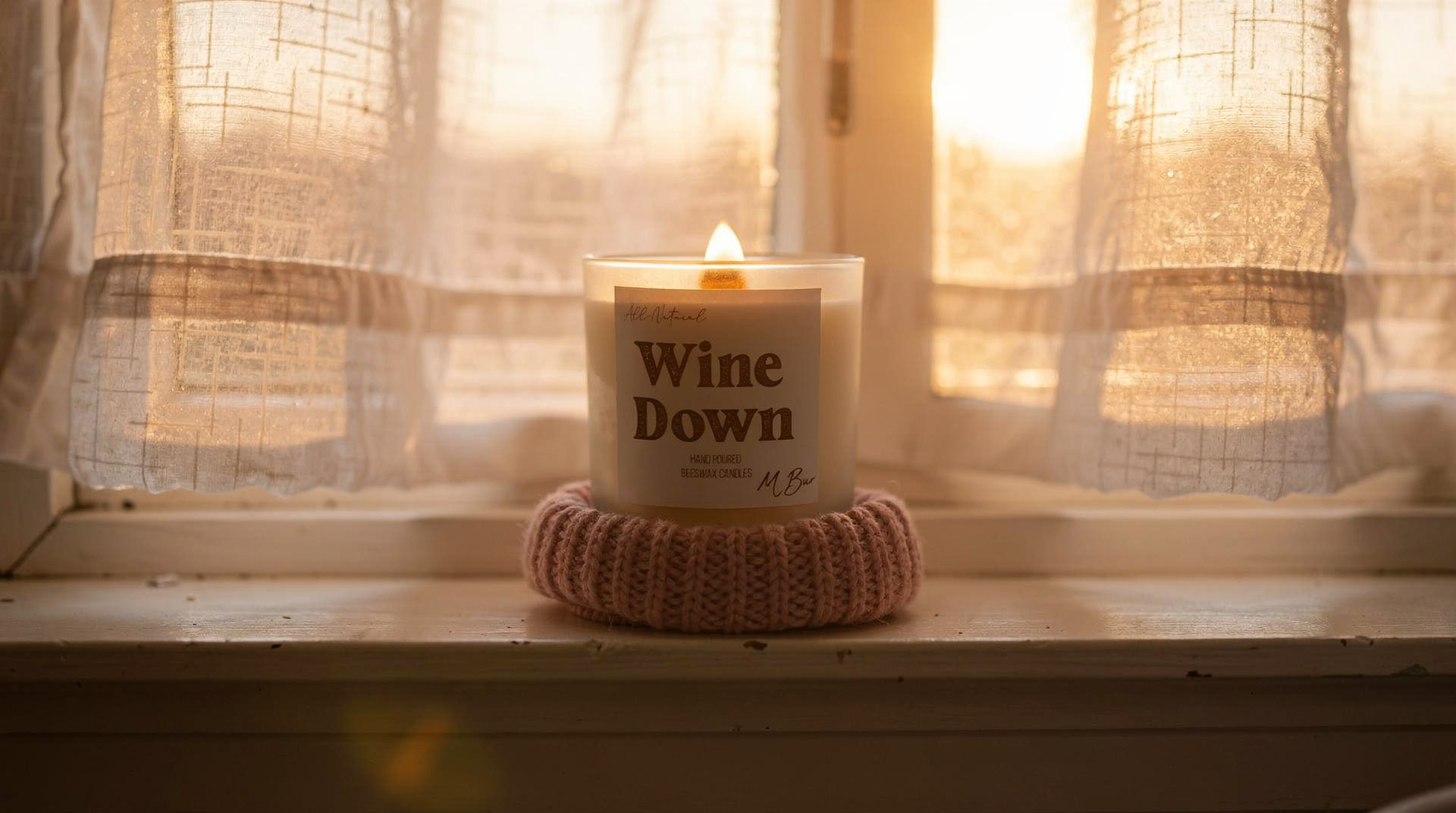
Here is how most parents actually handle this: they burn candles in adjacent rooms, in the living room, hallway, or master bedroom, and let the scent carry naturally through the space. A 100% beeswax candle with good scent throw will fill a larger area than most people expect. The Wine Down beeswax candle, with its lavender, chamomile, and rosemary notes, burns up to 80 hours in the 12oz size ($60) and is built for exactly that kind of ambient, whole room use.
If you want scent specifically in the nursery without an open flame, a room spray is a cleaner option. MBur's room sprays are made with 100% natural, organic, non GMO grape alcohol and contain no aerosol propellants or toxic fragrance.
A Practical Checklist for Parents Who Want to Keep Burning
Before you light anything in a home with a baby, run through this list:
- Wax: Is it 100% beeswax or 100% soy? Not a blend, not paraffin, not unspecified.
- Fragrance: Is the fragrance explicitly phthalate free? If the brand does not say, assume it is not.
- Wick: Cotton or wood only. No metal core wicks.
- Dyes: No chemical dyes. Colored candles typically achieve that color through synthetic colorants you do not want airborne.
- Location: Not in the room where the baby is sleeping. Adjacent rooms with good airflow are fine.
- Ventilation: Even with a clean candle, crack a window or run an air purifier in a small space.
- Burn time: Do not burn for more than three to four hours at a stretch in a small room.
MBur candles check every single box on that list. 100% beeswax, phthalate free fragrance, wooden wicks, no chemical dyes, handmade in Queens, NY. If you want to try a scent before committing to a full size, the $5 candle samples let you test any scent in the collection before buying a larger candle.
Frequently Asked Questions
Can I burn a candle in the same room as my baby?
We recommend against burning any open flame candle in a room where a baby is sleeping or unattended, even a clean beeswax option. Burn in adjacent rooms and let the scent travel. The real risk is not just air quality but fire safety. For scent in the nursery specifically, a phthalate free room spray is a safer approach.
What makes a candle baby safe?
Four things: 100% beeswax or soy wax (not a paraffin blend), phthalate free fragrance, a cotton or wooden wick, and no chemical dyes. Candles that clear all four bars are genuinely low risk for use around infants when burned in well ventilated adjacent spaces. You can browse MBur's full collection and every candle meets all four criteria.
How long do beeswax candles actually burn?
Beeswax has the highest melting point of any candle wax, which means it burns slower and longer than paraffin or soy. MBur's 12oz candles are rated for up to 80 hours of burn time. For comparison, most paraffin candles of the same size burn out in 40 to 50 hours. You can read the full breakdown in our guide on how long beeswax candles actually last.
Are scented candles worse than unscented for babies?
It depends entirely on the fragrance. Toxic fragrance blends with phthalates are a legitimate concern for infants. Phthalate free fragrance in a beeswax base is a much lower risk proposition. Unscented is always the safest choice if you are burning directly adjacent to a sleeping baby, but for ambient use in other rooms, a clean ingredient scented candle is not the danger most people assume it is.
Is candle soot dangerous for babies?
Paraffin candle soot contains fine particles that can settle on surfaces and circulate in indoor air. For developing lungs, repeated exposure to soot particles is worth taking seriously. Beeswax candles produce significantly less soot than paraffin candles because they burn at a higher temperature and more completely. If you have ever noticed black residue on walls or jar lids near a paraffin candle, that soot is the concern. Our post on candle soot and your health goes deeper on this.
The Bottom Line
Candles are not categorically bad for babies. Paraffin candles with toxic fragrance and metal core wicks are a problem in any home, and the concern is amplified in a nursery. The solution is not to give up candles entirely. It is to be specific about what goes into them.
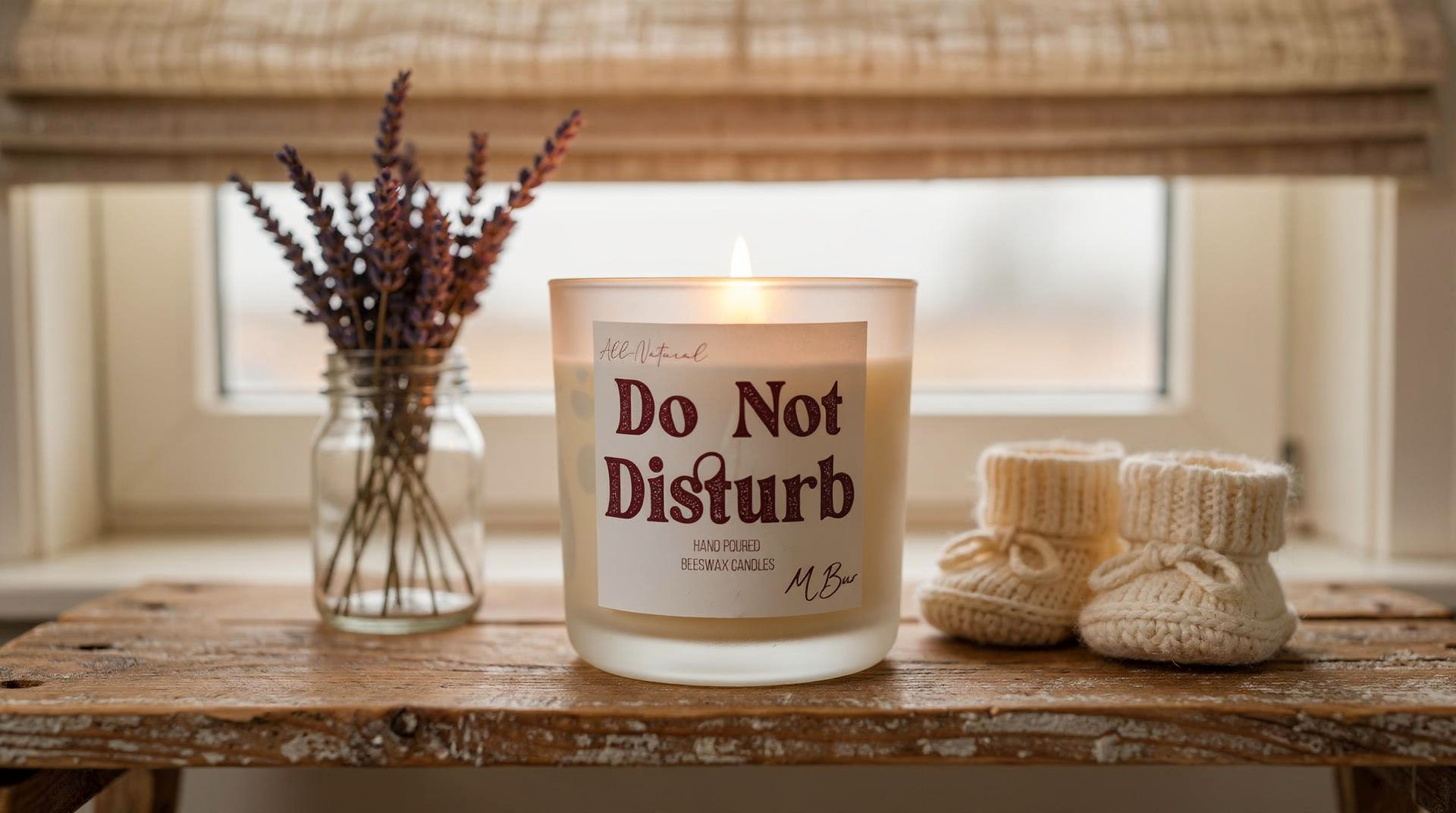
If you want one candle to start with, the Do Not Disturb beeswax candle is purpose built for sleep environments. It is 100% beeswax, phthalate free, wooden wicked, dye free, and the scent is described by customers as soothing and not overpowering. The 20 hour size is $20 and a smart starting point for any parent who wants to test it first.
"I love the scent of this candle. It is lovely not overpowering. It's soothing fragrance more than covers my bedroom and bathroom. It is aromatherapy at its best." Dawne Forrest, verified MBur customer
Start with the 20 hour size, burn it in the room next to the nursery, and see how it goes. You can always size up from there.
Shop the Do Not Disturb beeswax candle starting at $20
Keep Reading:
- Best Non Toxic Candles for Kids' Rooms: Clean Burning Picks Parents Actually Trust
- Candle Soot and Your Health: What It Is, Why It Happens, and How to Avoid It
- Paraffin vs. Beeswax vs. Soy: Which Candle Wax Is Safest for Indoor Air Quality?
- Why Toxic Fragrance Is the Real Candle Villain (Not the Wax)