

Are Candles Allowed in Apartments? What Renters Need to Know
Are Candles Allowed in Apartments? What Renters Need to Know Before Lighting Up
You just moved into a new apartment. You unpack your candles first because obviously. Then you actually read your lease and hit a clause about open flames, and suddenly you're holding a $60 candle wondering if you're about to violate your rental agreement.
Here is the honest answer: it depends. Some buildings ban candles outright. Others have no restrictions at all. Most fall somewhere in the middle, with rules vague enough to be confusing. This post breaks down how to read your lease, what your actual rights are as a renter, what makes a candle genuinely safer to burn indoors, and which candles are worth keeping even if your building gives you the green light.
If you are looking for apartment-safe candles that burn clean with minimal soot and no toxic fragrance, start with our full collection of 100% beeswax candles designed for small spaces and sensitive noses. But if you want to know whether you can legally light one in the first place, keep reading.
Why Apartments and Candles Have a Complicated Relationship
Apartment buildings are dense, walls are shared, and sprinkler systems are expensive to trigger. One candle left unattended near a curtain can become a building-wide problem fast, and landlords and property managers know this.
According to the National Fire Protection Association, candles cause an estimated 7,400 home fires per year in the United States. Apartments account for a meaningful share of those. So the concern is not imaginary.
That said, the actual risk associated with candles varies enormously depending on the type of candle, how it is burned, and what it is made of. A paraffin candle with a cotton wick left burning for six hours next to a window is a different situation entirely from a properly tended beeswax candle on a stable surface. The rules in most leases, though, do not always make that distinction.
How to Actually Read Your Lease on This
Most lease agreements do not say the word candle. What they say is something like: no open flames, no fire hazards, or no combustible materials. These terms are broad enough that a landlord could interpret them to cover candles, and also broad enough that many renters burn candles for years without issue.
Here is what to look for:
The phrase "open flame"
If your lease prohibits open flames, that almost certainly includes candles. It may also include incense, gas stoves (less common), and even certain types of space heaters. If you see this language, ask your landlord or property manager directly before burning anything.
Fire hazard clauses
Some leases prohibit anything that could constitute a fire hazard. This is more subjective. A properly used candle on a fireproof surface with someone present could reasonably be argued not to be a fire hazard. A candle left burning overnight next to fabric clearly is. Most landlords who use this language are targeting negligent behavior, not the act of lighting a candle itself.
HOA or building rules addendums
If you live in a managed building, there is often a separate document with building-specific rules. These sometimes have stricter policies than the lease itself. Check for any attached addendum before assuming the lease tells the whole story.
When in doubt, ask in writing
Send your landlord a quick email asking whether candles are permitted. Getting a yes in writing protects you. Getting a no tells you what you are working with. Either way, you know where you stand.
What Happens If You Burn Candles in a No-Candle Building
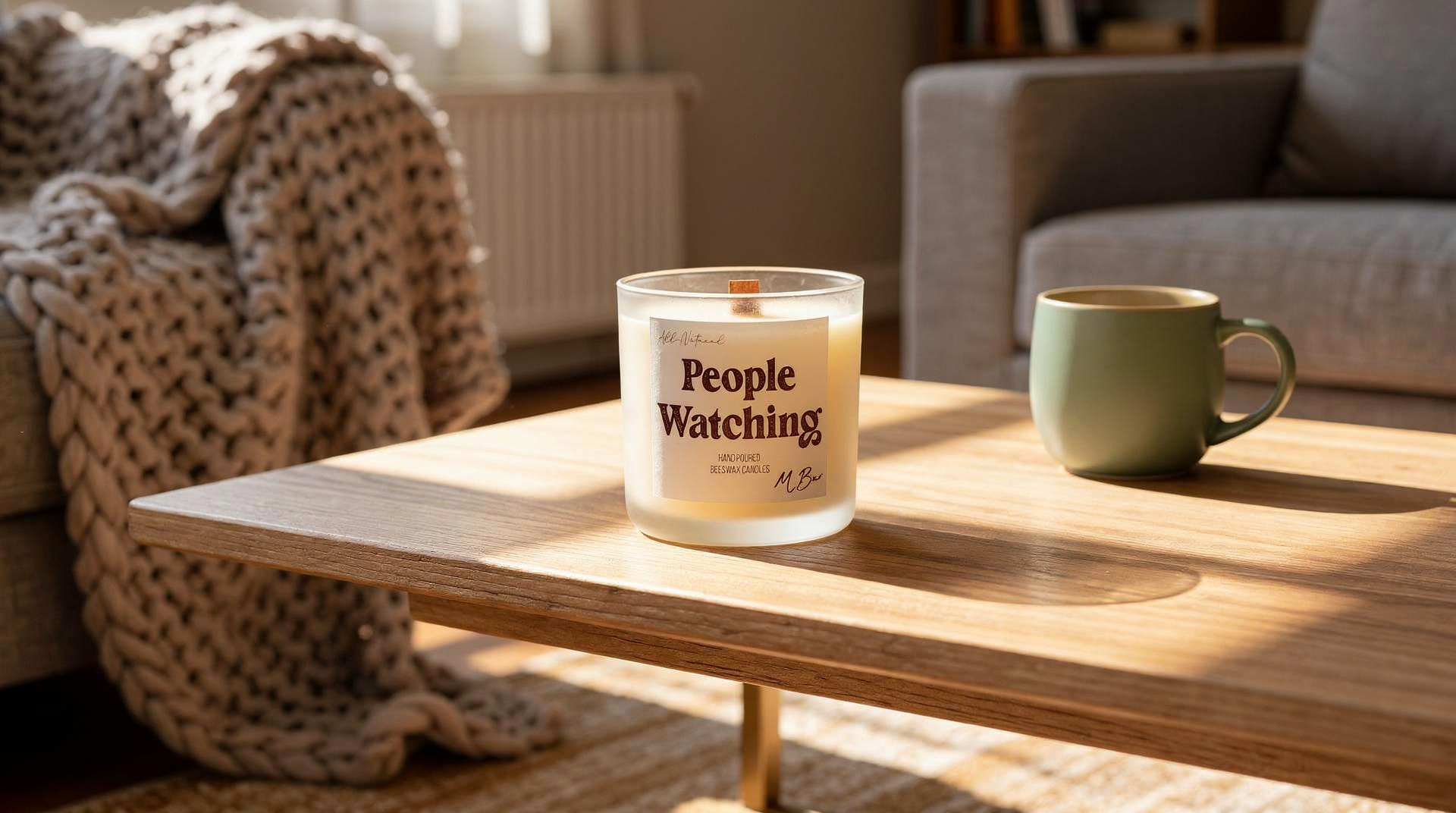
The consequences depend on your lease and your landlord. In most cases, burning a candle in violation of your lease is not grounds for immediate eviction. It is more likely to result in a warning, a fine, or if soot damage occurs, a deduction from your security deposit.
Soot is the real issue here. Paraffin candles are notorious for producing black soot that coats walls, ceilings, and HVAC vents over time. Even tenants who were allowed to burn candles have lost portions of their deposits to soot remediation. This is a documented complaint in renter forums across the country.
The type of candle you burn matters here more than most people realize. More on that in a moment.
The Candle Type Problem No One Talks About
Most apartment candle conversations focus entirely on fire risk. The question people are not asking is: even if candles are technically allowed, what are you actually releasing into your air?
Paraffin wax is derived from petroleum. When burned, it releases volatile organic compounds including benzene and toluene, both classified as hazardous air pollutants by the EPA under the Clean Air Act. In a well-ventilated house, this is less of a concern. In a 650-square-foot apartment with limited airflow, it adds up.
This is not fearmongering. It is chemistry. And it is exactly why choosing a cleaner-burning candle matters even more in a smaller, less ventilated space.
Our Top Picks for Apartment-Safe Candles
Best Overall for Apartments: MBur Candle Co. Wine Down
If you want a candle that burns clean, smells incredible, and will not leave a trace of soot on your apartment walls, this is the one you light when you finally get the green light from your lease. Our Wine Down beeswax candle is made from 100% beeswax with phthalate-free non-toxic fragrance oils and a wooden wick. No paraffin. No petroleum byproducts.
Why it works for apartments: minimal soot output, no synthetic dyes, phthalate-free fragrance, wooden wick that burns cleanly without mushrooming
Scent profile: Lavender, chamomile, sage, cedar, and sandalwood
Price: 20-hour at $20, 40-hour at $25, 80-hour at $60
"A lot of other candles tend to give me headaches, but this one was a total game changer. I was able to enjoy the calming aroma without any discomfort. It made my space feel cozy and refreshed at the same time." Nicole D., verified buyer (5 stars)
Best for Long Burns: MBur Candle Co. Do Not Disturb
If you want the most burn time for your money in a small space, the Do Not Disturb beeswax candle burns up to 80 hours in the large size. That puts the cost per hour at $0.75/hour for the 80-hour, and the 40-hour size at $25 comes in even cheaper at $0.625/hour. In a small apartment, the soft scent fills the room without being overwhelming.
Why it works for apartments: 80 hours of clean burn time in the large size, soft scent that doesn't overpower small rooms, same beeswax base with minimal soot
Scent profile: Soft pear, peach blossom, vanilla, and sandalwood
Price: 20-hour at $20, 40-hour at $25, 80-hour at $60
Best for First-Time Buyers: The 20-Hour Entry Size
If you have never burned a beeswax candle before and want to test one in your apartment without committing to the largest size, the 20-hour size at $20 is the entry point across the entire MBur lineup. Every scent in the line is available in that size, which is the easiest way to figure out what works in your specific apartment before sizing up to the 40-hour or 80-hour.
Best for: First-time beeswax buyers, severe chemical sensitivities, testing scents before committing to a larger jar
Price: $20 for the 20-hour size in any scent
What Makes a Candle Safer for Apartment Burning
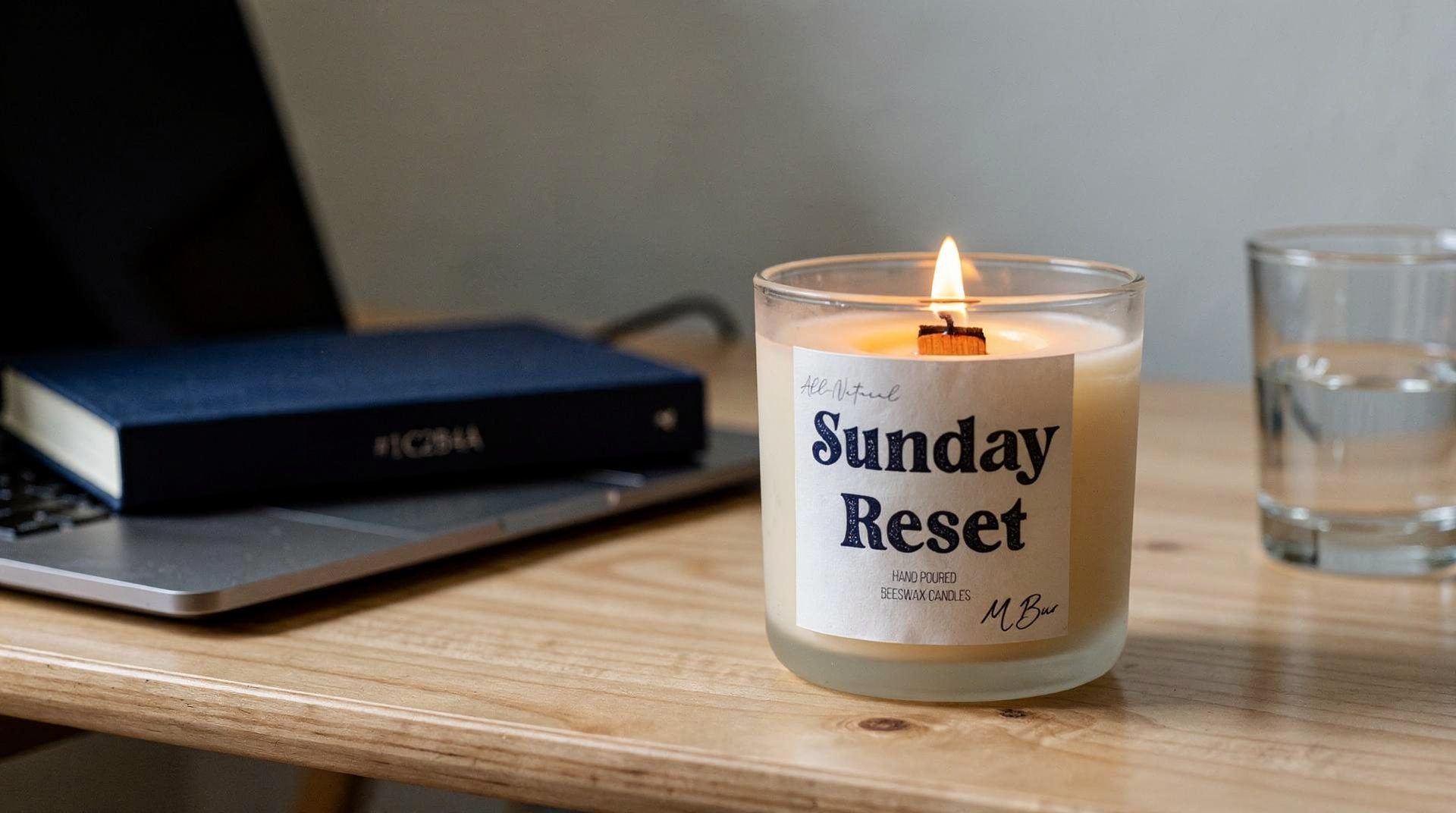
If candles are permitted in your building, or if you have gotten written confirmation from your landlord, here is what to look for when choosing one for an apartment specifically.
Wax type
Beeswax burns the cleanest of any candle wax. It produces minimal soot, no petroleum byproducts, and no toxic fragrance compounds. Soy is a step up from paraffin but is frequently blended with paraffin and often uses toxic fragrance. If the label does not say 100% beeswax or 100% soy, assume it is a blend.
Fragrance formulation
Phthalates are a class of chemical used in many conventional candle fragrances to help scent stick to wax. They are endocrine disruptors, meaning they interfere with hormone function. In a small apartment space, you want fragrance that is explicitly phthalate-free. All MBur candles use only phthalate-free non-toxic fragrance across the entire line.
Wick material
Avoid metal-core wicks, which can contain lead in imported candles (US-made candles have been required to use lead-free wicks since 2003). Wooden wicks and pure cotton wicks are both safer options. Wooden wicks also burn evenly and produce a soft crackling sound, which is not a marketing claim, it is just a fact about burning wood. Every MBur candle uses an untreated wooden wick if that sounds like your thing.
Soot output
Low-soot candles protect your walls and your deposit. Beeswax produces minimal soot. Paraffin produces significantly more. This is one of the most practical differences for apartment renters specifically.
| Feature | Apartment-Safe Choice | Avoid |
|---|---|---|
| Wax | 100% beeswax | Paraffin, paraffin blends |
| Wick | Cotton or wooden | Metal-core, zinc-core |
| Fragrance | Phthalate-free or unscented | Toxic fragrance blends with phthalates |
| Color | Natural beeswax color | Synthetic dyes |
| Soot | Minimal (beeswax) | Heavy black residue (paraffin) |
Apartment Candle Safety Rules That Actually Matter
Whether your building allows candles or not, these are the practices that prevent the fires and the deposit disputes.
- Never leave a candle burning unattended. This is not a suggestion. It is the single most important rule.
- Keep candles away from fabric. Curtains, bedding, throw blankets, and drapes are how candle fires spread.
- Trim your wick before each burn. A too-long wick produces a larger, less controlled flame and more soot. Trim to about a quarter inch for cotton wicks. For wooden wicks, knock off any carbon char from the previous burn.
- Use a stable, fireproof surface. No candles on soft surfaces. A ceramic dish, a stone coaster, or a dedicated candle holder on a hard surface is what you want.
- Limit burn time to four hours max per session. Beyond four hours, the glass container heats up enough to become a risk factor on some surfaces. Let the candle cool fully between burns.
- Ventilate the space. Even clean-burning candles benefit from some airflow. Cracking a window slightly improves air quality and keeps any fragrance from becoming overwhelming in a small space.
The Flameless Alternative Conversation
If your building genuinely prohibits open flames, flameless candles and wax warmers are the practical workaround. They are not as good. A wax warmer does not have the same visual quality as a real flame, and heated wax without combustion releases scent differently than a burning candle does. But they are better than nothing.
If you go the wax warmer route, the same rules about wax and fragrance quality apply. A cheap wax melt made with paraffin and toxic fragrance in a warmer is still releasing those compounds into your air. Use the same quality filter you would apply to a candle: 100% beeswax or high-grade soy, phthalate-free fragrance.
FAQ: Apartment Candle Questions Answered
Can my landlord actually enforce a no-candle rule?
Yes, if it is written into your lease or building rules. A lease violation clause gives landlords the right to issue warnings, fines, or in repeated or damaging cases, begin eviction proceedings. The more practical enforcement is through your security deposit if soot or wax damage is found at move-out. Specifics vary by jurisdiction and lease, so consult local tenant law if a real dispute comes up.
What if I burn candles and there is no specific rule in my lease?
If your lease does not mention open flames or fire hazards, you are generally in permissible territory. Document your lease language and, if you want extra protection, get written confirmation from your landlord. Burn responsibly and keep the space clean.
Do beeswax candles actually produce less soot than regular candles?
Yes, measurably so. Paraffin wax produces black carbon soot that deposits on walls and surfaces over time. Beeswax burns at a higher temperature with a cleaner combustion, producing significantly less particulate matter. This is one of the main reasons apartment renters specifically benefit from switching to beeswax. Our full collection of 100% beeswax candles is a good place to start if you are making the switch.
How long can I safely burn a candle in a small apartment?
Four hours is the standard maximum per burn session. In a very small space, you might want to cap it at two to three hours and crack a window for airflow. Let the candle cool completely before relighting.
Is there a candle I can try first before committing to a full size?
Yes. The 20-hour size at $20 is the entry point and is available in every scent in the line. It is enough burn time to test a scent in your space before sizing up to the 40-hour at $25 (the best per-hour value) or the 80-hour at $60.
What is the best candle for a small apartment with poor ventilation?
A 100% beeswax candle with phthalate-free fragrance. Some preliminary research suggests beeswax may release negative ions that bind to airborne particulates, though the science on that is still developing. What is well-established is that beeswax produces significantly less soot and no benzene or toluene when burned, which makes it the cleaner option for any small enclosed space. The Wine Down candle is a good starting point because the lavender and sage profile is calming without being overpowering in tight spaces.
The Bottom Line
Most apartments allow candles. Many that technically restrict them do not enforce it unless something goes wrong. The smarter move is to know your lease, burn responsibly, and choose a candle that does not leave soot on your walls or compounds in your air.
If you want a candle that is genuinely safe for apartment burning, the Wine Down beeswax candle burns clean, smells like a spa without the chemical edge, and will not coat your ceiling in paraffin soot. Start with the 20-hour size at $20 to test it in your space first.
Shop our complete collection of apartment-safe beeswax candles
Related reading:
- Best Clean Burning Candles for Apartments: No Soot, No Headaches, Just Good Vibes
- The Best Beeswax Candles for Allergy Sufferers That Actually Smell Amazing
- Candle Soot and Your Health: What It Is, Why It Happens, and How to Avoid It
- Complete Beeswax Candle Care Guide: Keep Every Candle Burning Like New